
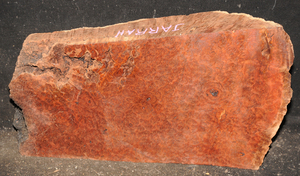
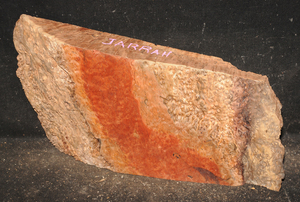
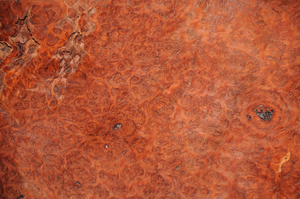
Jarrah Burl
Eucalyptus marginata
This gorgeous burl from Australia is very dense in weight yet has an unique open texture that produces fascinating turnings and other projects.
Item Number: W44594
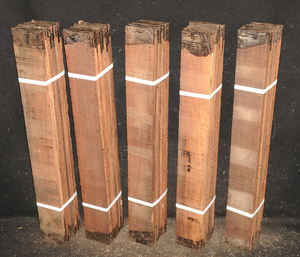
Mexican Cocobolo Thins Bundles
Dalbergia retusa
The wood is very oily which makes it difficult to glue but on the plus side the oiliness makes it easy to produce a fantastic polish on finished pieces. Wear a respirator mask when working Cocobolo as the dust can produce asthma-like reactions. Cocobolo is a small to medium sized tree and is found mainly in Mexico, Costa Rica, Nicaragua, and Panama.
Due to CITES regulations, we can only ship this species to customers in the United States.
Item Number: W44593
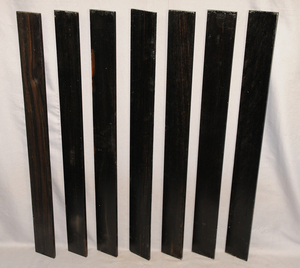
West African Ebony Thins
Diospyros crassiflora
Sometimes called Gabon or Gaboon, this Ebony is sometimes jet black but oftentimes has grayish streaks that mostly disappear when finished or after the made object has been put into service. This Ebony has a marked resistance to checking that is characteristic of some of the Indian and Asian species. It has a wonderful texture and is easily carved, planed, turned, and milled. It is fairly fine-grained and takes a high polish. This Ebony usually originates in either Cameroon or Nigeria and the logs are rough hewn in the forest and oftentimes brought to the nearest road by human porters. With the disappearance of other species of black Ebony this species is fast becoming the Ebony of choice.
Item Number: W44592
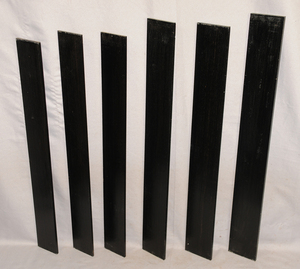
West African Ebony Thins
Diospyros crassiflora
Sometimes called Gabon or Gaboon, this Ebony is sometimes jet black but oftentimes has grayish streaks that mostly disappear when finished or after the made object has been put into service. This Ebony has a marked resistance to checking that is characteristic of some of the Indian and Asian species. It has a wonderful texture and is easily carved, planed, turned, and milled. It is fairly fine-grained and takes a high polish. This Ebony usually originates in either Cameroon or Nigeria and the logs are rough hewn in the forest and oftentimes brought to the nearest road by human porters. With the disappearance of other species of black Ebony this species is fast becoming the Ebony of choice.
Item Number: W44591
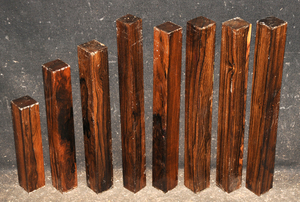
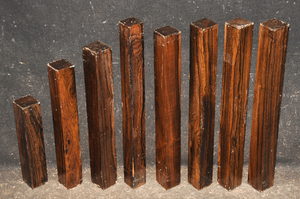
Ziricote Turning Squares
Cordia dodecandra
Ziricote is another timber we get from the Yucatan Peninsula of Mexico. It is a lovely wood with a very pronounced ray fleck on radial surfaces sometimes producing a "landscape" effect much like picture jasper.
Item Number: W44590
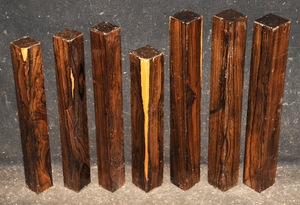
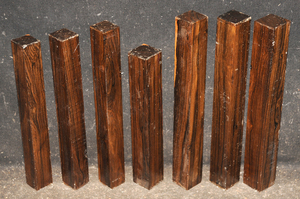
Ziricote Turning Squares
Cordia dodecandra
Ziricote is another timber we get from the Yucatan Peninsula of Mexico. It is a lovely wood with a very pronounced ray fleck on radial surfaces sometimes producing a "landscape" effect much like picture jasper.
Item Number: W44589
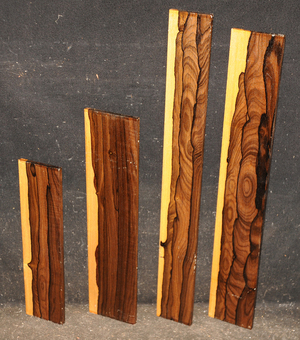
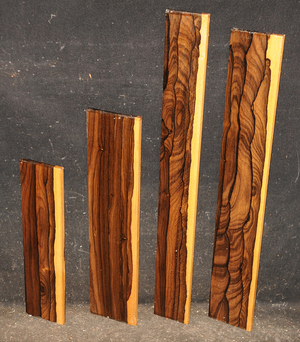
Ziricote Thins
Cordia dodecandra
Ziricote is another timber we get from the Yucatan Peninsula of Mexico. It is a lovely wood with a very pronounced ray fleck on radial surfaces sometimes producing a "landscape" effect much like picture jasper.
Item Number: W44588
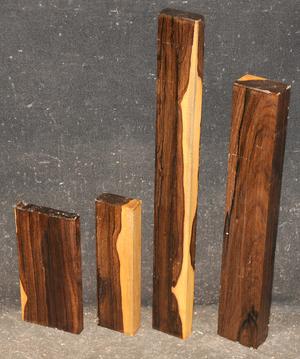
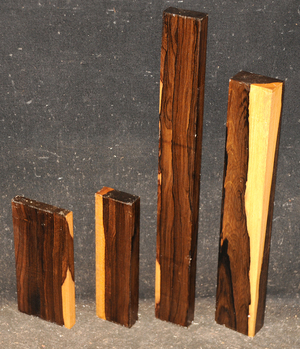
Ziricote
Cordia dodecandra
Ziricote is another timber we get from the Yucatan Peninsula of Mexico. It is a lovely wood with a very pronounced ray fleck on radial surfaces sometimes producing a "landscape" effect much like picture jasper.
Item Number: W44587
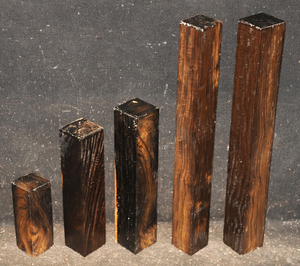
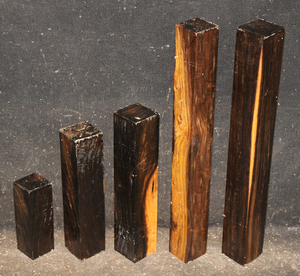
Figured Black Chacate Turning Squares
Guibourtia conjugata
Also called Tsotso. Our material is from Mozambique but it is found in other E. African & S. African locales. It is golden brown with darker streaks. Very hard and heavy but machines well with few problems. Excellent for cabinetry and wood turning. Capable of taking a high polish and is stable in service.
Item Number: W44586
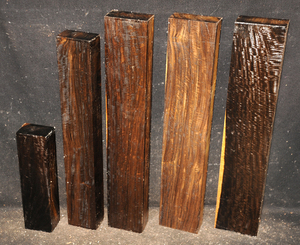
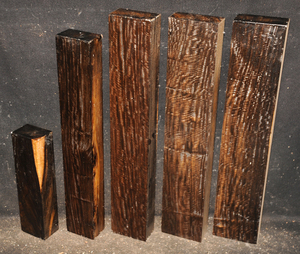
Figured Black Chacate
Guibourtia conjugata
Also called Tsotso. Our material is from Mozambique but it is found in other E. African & S. African locales. It is golden brown with darker streaks. Very hard and heavy but machines well with few problems. Excellent for cabinetry and wood turning. Capable of taking a high polish and is stable in service.
Item Number: W44585
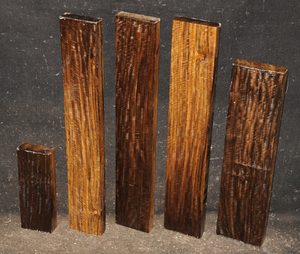
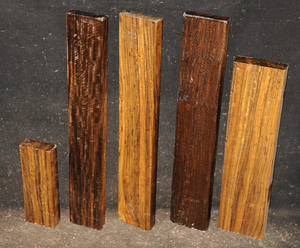
Figured Black Chacate
Guibourtia conjugata
Also called Tsotso. Our material is from Mozambique but it is found in other E. African & S. African locales. It is golden brown with darker streaks. Very hard and heavy but machines well with few problems. Excellent for cabinetry and wood turning. Capable of taking a high polish and is stable in service.
Item Number: W44584
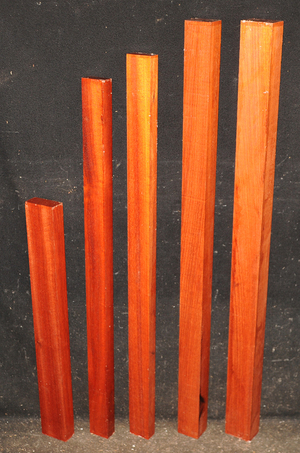
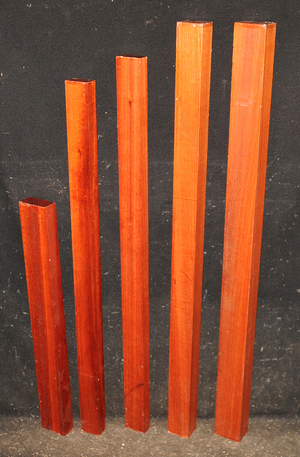
Brazilian Bloodwood
Brosimum paraense
Also called Satine, Cacique, and Cardinalwood. The heartwood is a rich strawberry red, in sharp contrast to the light colored sapwood. Takes a high, lustrous finish.
Item Number: W44583
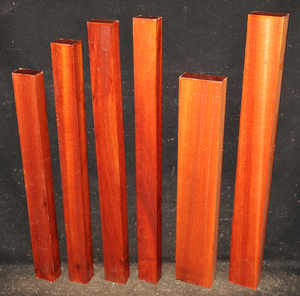
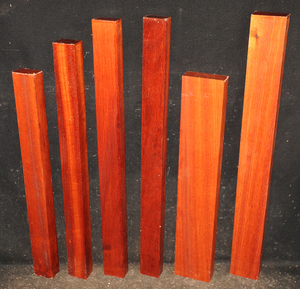
Brazilian Bloodwood
Brosimum paraense
Also called Satine, Cacique, and Cardinalwood. The heartwood is a rich strawberry red, in sharp contrast to the light colored sapwood. Takes a high, lustrous finish.
Item Number: W44582
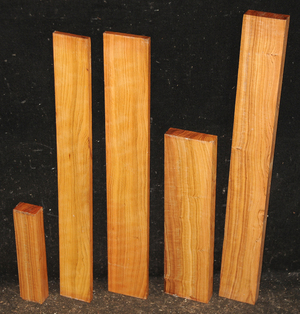
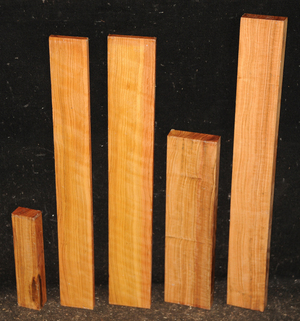
Wild Olivewood
Olea macrocarpa
A species of Olive from South Africa. Very rarely seen on the commercial timber market. It is similar in color to the European species but is denser and harder with more variegations of color and grain. Partially air-dried.
Item Number: W44581
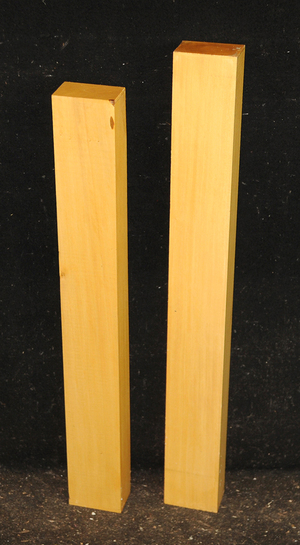
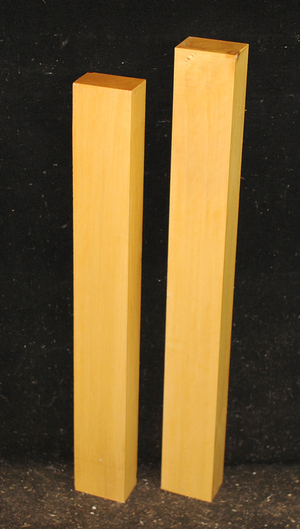
Castello Boxwood
Calycophyllum multiflorum
Castello Boxwood, though not a true Buxus species, still has a very fine texture and a lovely light canary yellow color. This is truly a dream wood to mill.It is an excellent turnery wood, capable of very fine detail. Also very popular for making scale timbers and other parts for model ships. Air-dried.
Item Number: W44580
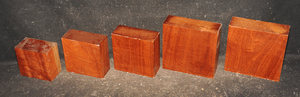
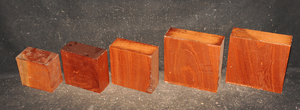
Figured Sapele Bowl Blanks
Entandrophragma cylindricum
The Sapele tree is found in tropical West & Central Africa. Even when without figure as this board Sapele has an amazing luster and takes a beautiful polish.
These have some light pomelle figure.
Item Number: W44579
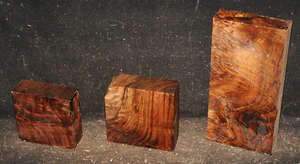
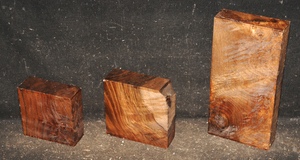
Figured Claro Walnut Bowl Blanks & Block
Juglans hindsii
A tree found in Southern Oregon and Northern California with the best material coming from the San Joaquin Valley. Lighter in color than Eastern Black Walnut (Juglans regia) it is often found with curly and quilted figure. Burly stumps are also a valuable source of wood for veneers, gunstocks, and wood turning blanks.
Item Number: W44578
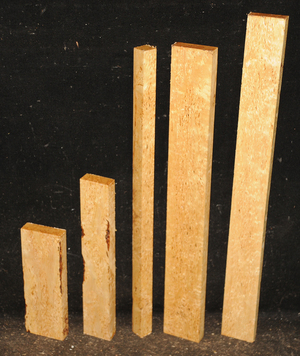
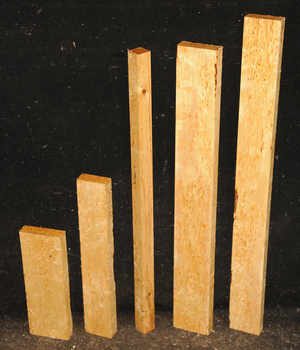
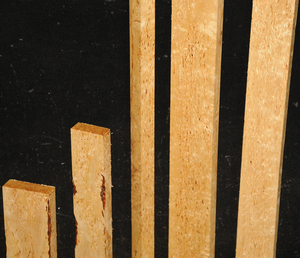
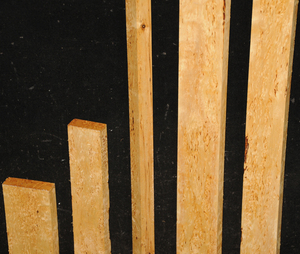
Masur Birch
Betula alba
Also called Alpine Burl or Karelian Burl after the Finnish province of Karelia where it is often found. The high figure found in this wood is caused when the tree heals the damage done by an invasive boring beetle. The beetle infestation leaves the trees stunted and sometimes deformed but produces wood with small twists and swirls that highlight the darker, burly figure. Rare.
Item Number: W44577
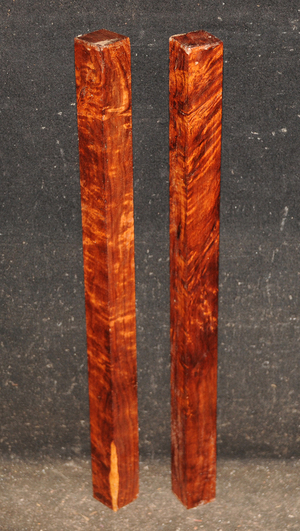
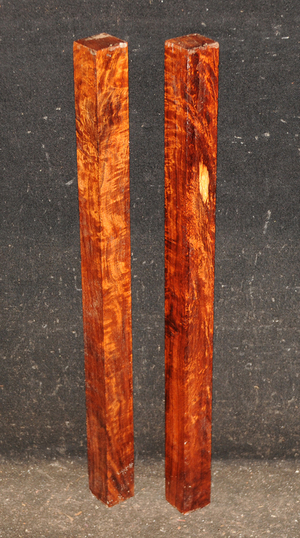
Figured Granadillo Turning Squares/Pool Cue Blanks
Platymiscium pinnatum
This beautiful hardwood is oftentimes sold as a substitute for Cocobolo. It is a species of Platymiscium and as such is in the same family as the Rosewoods. It is hard and heavy, stable in service, and takes a gorgeous polish.
Item Number: W44574
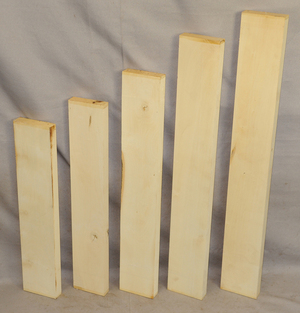
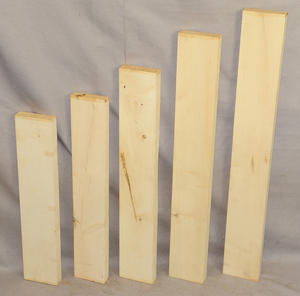
American Holly
Ilex opaca
Holly is the whitest wood commercially available. Our stock was cut during the winter and quickly dried in a vacuum kiln to prevent discoloration. The result is very white wood without gray or bluish staining. The wood is fine-grained and is excellent for turnery, inlays, musical instrument edge bandings, etc. The grade is common and better which means that there can be some defects, mainly knots.
Item Number: W44573
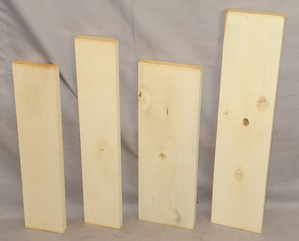
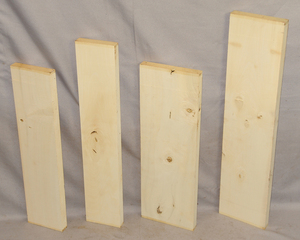
American Holly
Ilex opaca
Holly is the whitest wood commercially available. Our stock was cut during the winter and quickly dried in a vacuum kiln to prevent discoloration. The result is very white wood without gray or bluish staining. The wood is fine-grained and is excellent for turnery, inlays, musical instrument edge bandings, etc. The grade is common and better which means that there can be some defects, mainly knots.
Item Number: W44572
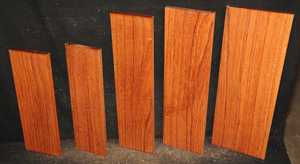
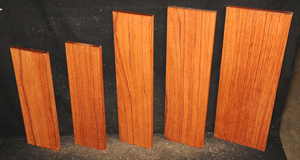
Ebiara
Berlinia sp.
This is a species found throughout W. Africa. It is also called Berlinia. The heartwood is a pinkish-brown color with purple to dark brown thin stripes. Select boards like these have a very nice figure combination of ribbon-stripe and an elongated, with-the-grain ropey curl. The wood has a nice crisp texture and machines very nicely.
Item Number: W44571
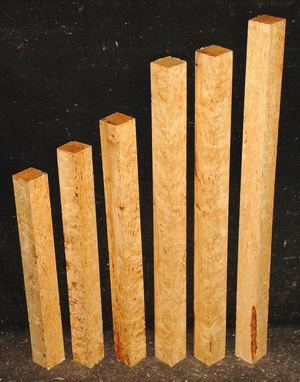
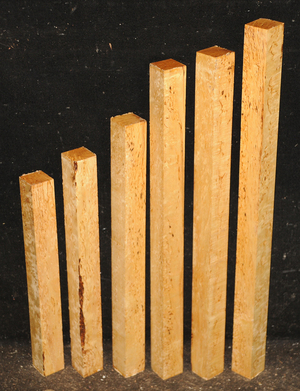
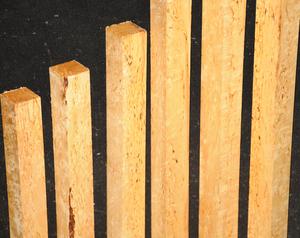
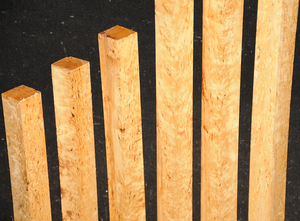
Masur Birch Turning Squares/Pool Cue Blanks
Betula alba
Also called Alpine Burl or Karelian Burl after the Finnish province of Karelia where it is often found. The high figure found in this wood is caused when the tree heals the damage done by an invasive boring beetle. The beetle infestation leaves the trees stunted and sometimes deformed but produces wood with small twists and swirls that highlight the darker, burly figure. Rare.
Item Number: W44576

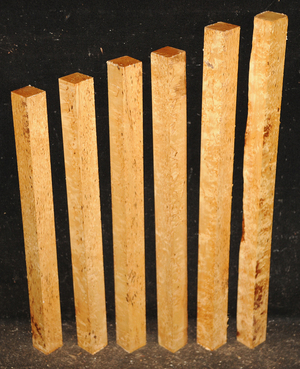
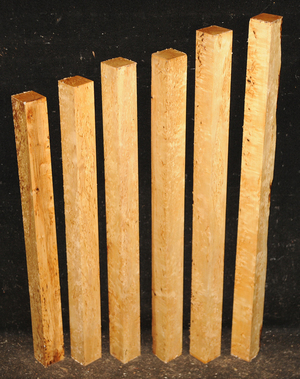
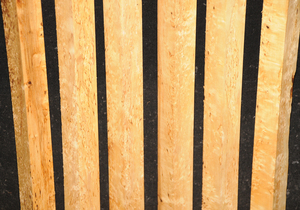
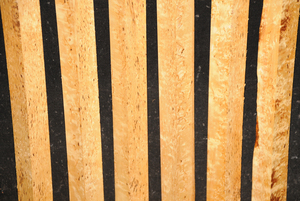
Masur Birch Turning Squares/Pool Cue Blanks
Betula alba
Also called Alpine Burl or Karelian Burl after the Finnish province of Karelia where it is often found. The high figure found in this wood is caused when the tree heals the damage done by an invasive boring beetle. The beetle infestation leaves the trees stunted and sometimes deformed but produces wood with small twists and swirls that highlight the darker, burly figure. Rare.
Item Number: W44575
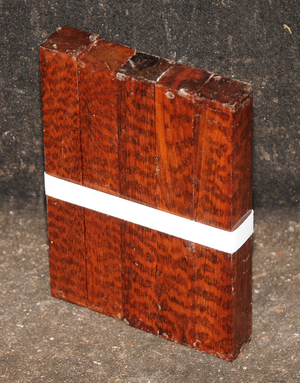
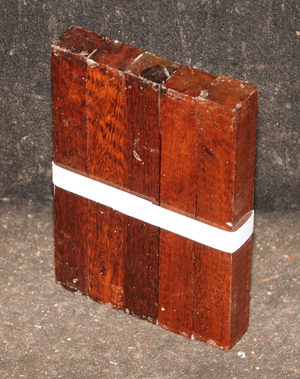
Snakewood Pen Blank Bundle
Piratinera guianensis
Also called Letterwood and Leopardwood. Color: dark red to reddish brown with irregular black speckles or stripes. Fine textured and highly lustrous. Very hard and heavy, 75-84 lbs/cu ft. Takes a beautiful finish. Very rare and very expensive. Guyana and Surinam.
Item Number: W44558
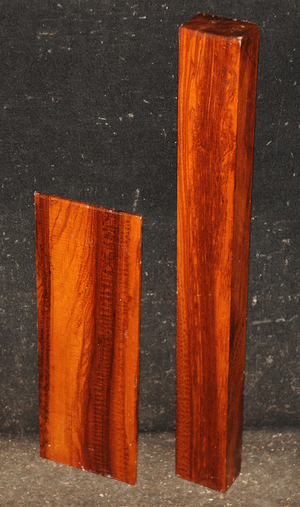
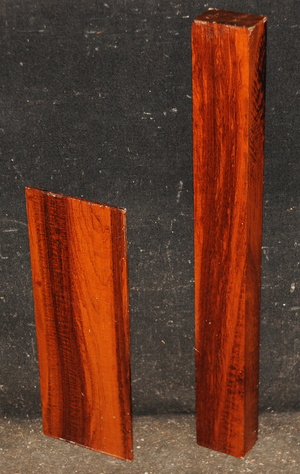
Snakewood Thin & Board
Piratinera guianensis
Also called Letterwood and Leopardwood. Color: dark red to reddish brown with irregular black speckles or stripes. Fine textured and highly lustrous. Very hard and heavy, 75-84 lbs/cu ft. Takes a beautiful finish. Very rare and very expensive. Guyana and Surinam.
Item Number: W44557
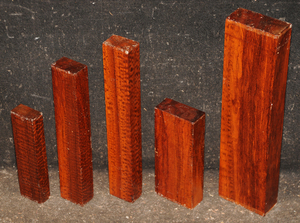
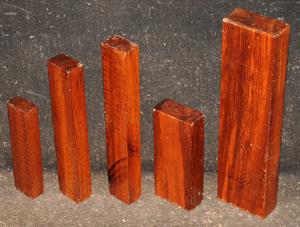
Snakewood Knife Handle Blanks & Blocks
Piratinera guianensis
Also called Letterwood and Leopardwood. Color: dark red to reddish brown with irregular black speckles or stripes. Fine textured and highly lustrous. Very hard and heavy, 75-84 lbs/cu ft. Takes a beautiful finish. Very rare and very expensive. Guyana and Surinam.
Item Number: W44556
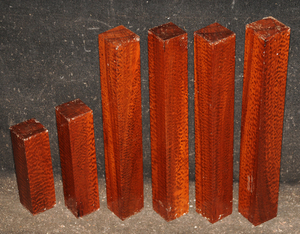
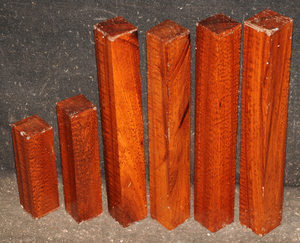
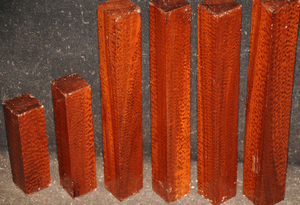
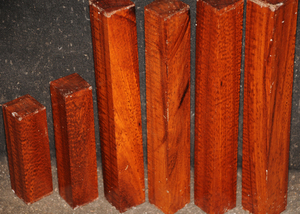
Snakewood Turning Squares
Piratinera guianensis
Also called Letterwood and Leopardwood. Color: dark red to reddish brown with irregular black speckles or stripes. Fine textured and highly lustrous. Very hard and heavy, 75-84 lbs/cu ft. Takes a beautiful finish. Very rare and very expensive. Guyana and Surinam.
Item Number: W44555
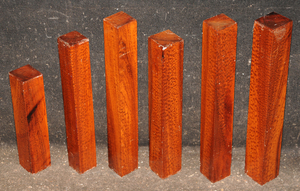
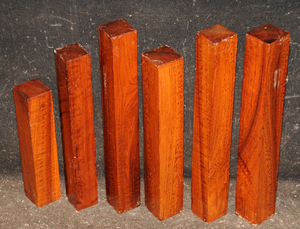
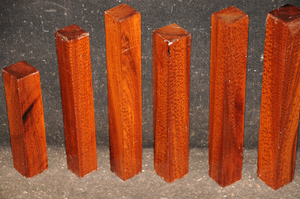
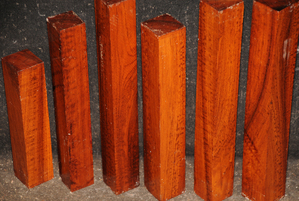
Snakewood Turning Squares
Piratinera guianensis
Also called Letterwood and Leopardwood. Color: dark red to reddish brown with irregular black speckles or stripes. Fine textured and highly lustrous. Very hard and heavy, 75-84 lbs/cu ft. Takes a beautiful finish. Very rare and very expensive. Guyana and Surinam.
Item Number: W44554
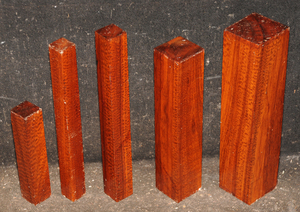
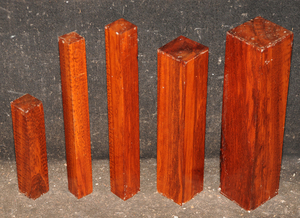
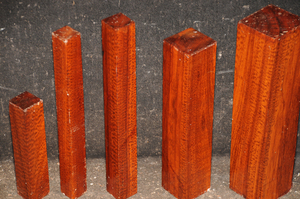
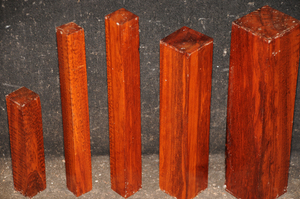
Snakewood Turning Squares
Piratinera guianensis
Also called Letterwood and Leopardwood. Color: dark red to reddish brown with irregular black speckles or stripes. Fine textured and highly lustrous. Very hard and heavy, 75-84 lbs/cu ft. Takes a beautiful finish. Very rare and very expensive. Guyana and Surinam.
Item Number: W44553
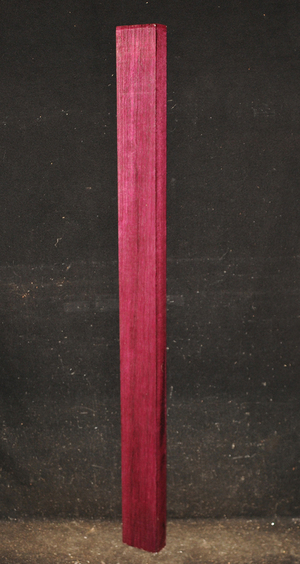
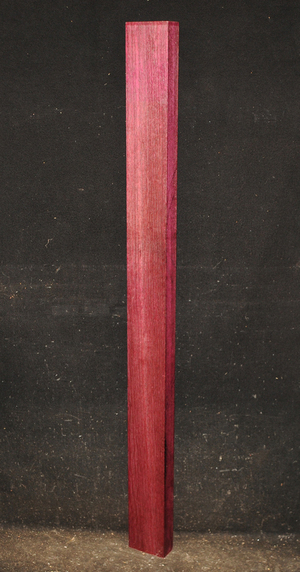
Purpleheart
Peltogyne sp.
The best colored & figured Purpleheart comes from Bolivia. It is also finer-grained than other Purpleheart species found elsewhere. Air-dried.
Item Number: W44570
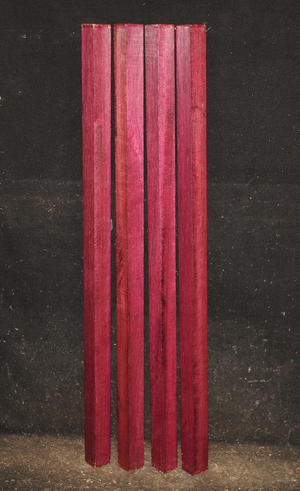
Purpleheart Cane Blanks
Peltogyne sp.
The best colored & figured Purpleheart comes from Bolivia. It is also finer-grained than other Purpleheart species found elsewhere. Air-dried.
Item Number: W44569
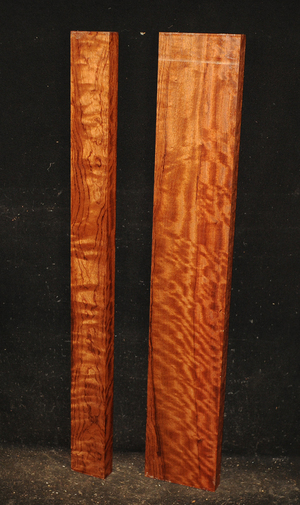
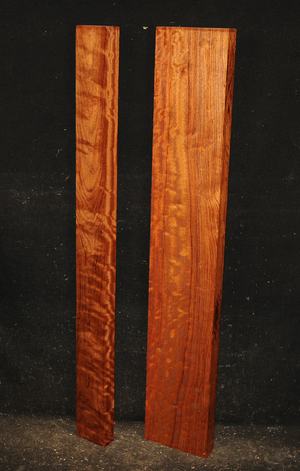
Figured Bubinga
Guibourtia tessmannii
Called by some woodworkers African Rosewood, Bubinga is a deep, lustrous, brownish-red color with a fine, darker striping. The figure makes the wood doubly beautiful. It is very hard and heavy and takes a glassy, smooth finish.
Due to CITES regulations, we can only ship this species to customers in the United States.
Item Number: W44567
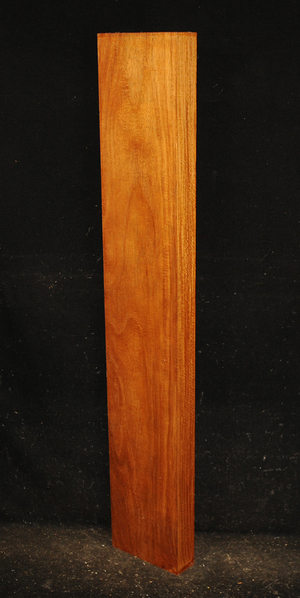
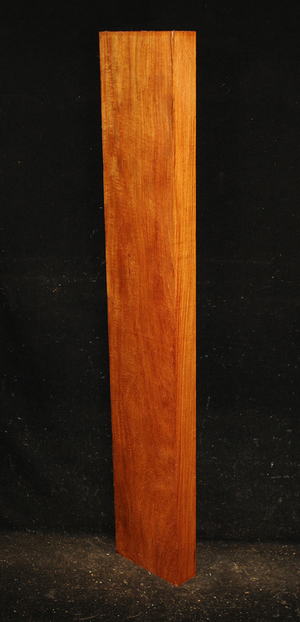
Narra
Pterocarpus indicus
Also called New Guinea Rosewood. It is a beautiful, highly lustrous golden yellow color sometimes with reddish streaks. A nice turning wood it is also used in furniture, jewelry boxes, handles, etc. It is easy to work and glue and takes a nice polish.
Item Number: W44565
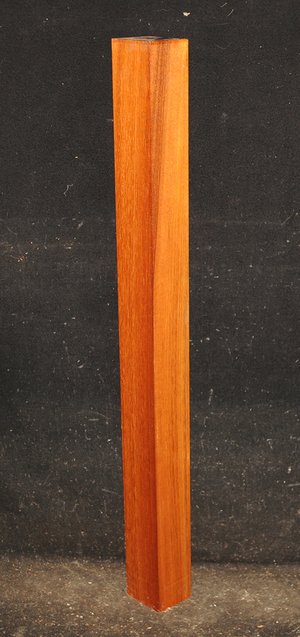
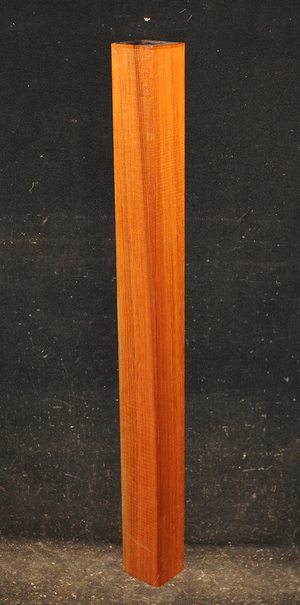
Genuine Mahogany
Swietenia macrophylla
Also called Acajou, Tropical American Mahogany, and Honduras Mahogany. This medium to large tree occurs throughout Central and South America. Related to Cuban Mahogany (Swietenia mahogani) and Pacific Coast Mahogany (Swietenia humilis). It produces one of the classic furniture and cabinetmaking woods. The heartwood varies from a light reddish-brown to a rich, dark red. Generally straight grained and exceptionally stable, it is easy to machine, hand plane, sand and finish. Occasional logs produce several figures, curly, quilted, and the rare plum pudding figure which looks like large drips running down the board. Used in fine furniture and joinery, boat building, and in the guitar industry for acoustic sets and necks.
Due to CITES regulations, we can only ship this species to customers in the United States.
Item Number: W44564
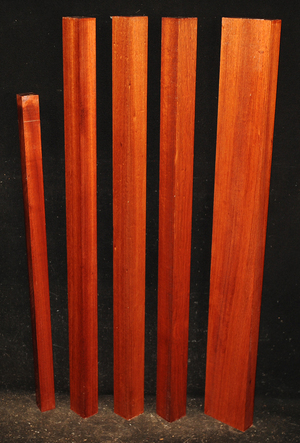
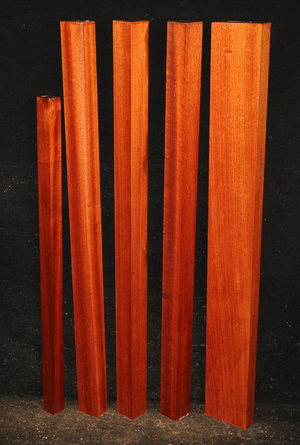
Brazilian Bloodwood
Brosimum paraense
Also called Satine, Cacique, and Cardinalwood. The heartwood is a rich strawberry red, in sharp contrast to the light colored sapwood. Takes a high, lustrous finish.
Item Number: W44563
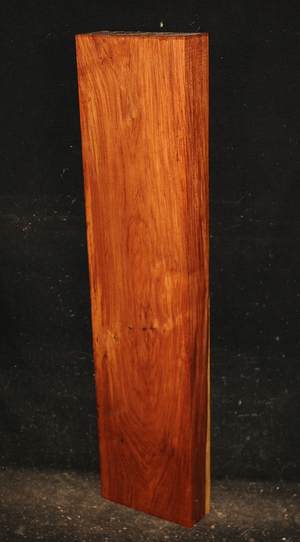
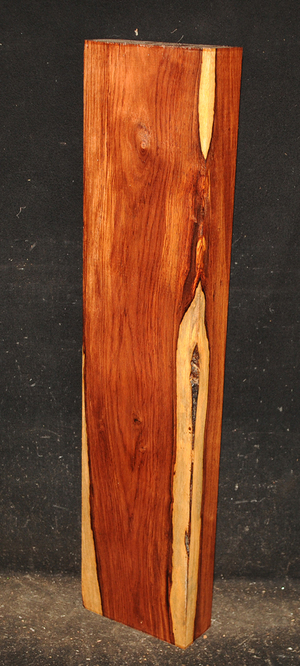
Honduras Rosewood
Dalbergia stevensonii
A true rosewood, most of our stock comes from Belize. Smelling like stored apples, it is a lovely wood to turn and takes a fantastic polish. Getting scarce on the world market.
Due to CITES regulations, we can only ship this species to customers in the United States.
Item Number: W44562
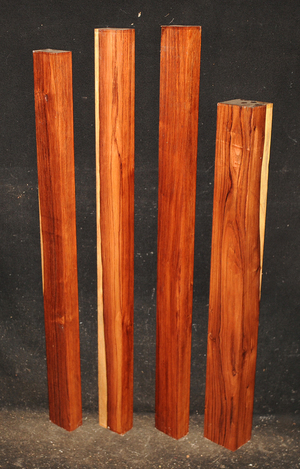
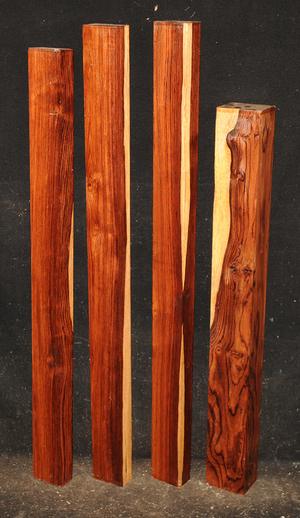
Honduras Rosewood
Dalbergia stevensonii
A true rosewood, most of our stock comes from Belize. Smelling like stored apples, it is a lovely wood to turn and takes a fantastic polish. Getting scarce on the world market.
Due to CITES regulations, we can only ship this species to customers in the United States.
Item Number: W44561
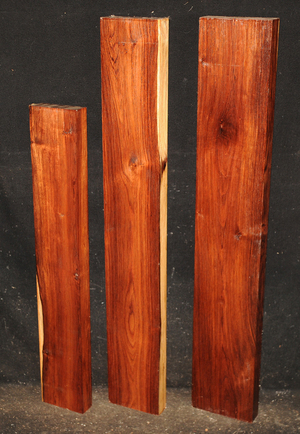
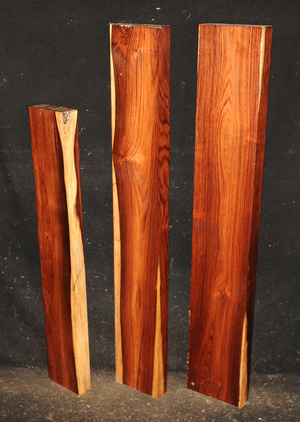
Honduras Rosewood
Dalbergia stevensonii
A true rosewood, most of our stock comes from Belize. Smelling like stored apples, it is a lovely wood to turn and takes a fantastic polish. Getting scarce on the world market.
Due to CITES regulations, we can only ship this species to customers in the United States.
Item Number: W44560
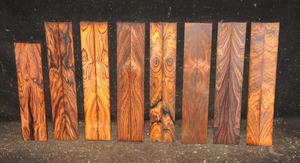
Mexican Cocobolo Knife Handle Scales
Dalbergia retusa
The wood is very oily which makes it difficult to glue but on the plus side the oiliness makes it easy to produce a fantastic polish on finished pieces. Wear a respirator mask when working Cocobolo as the dust can produce asthma-like reactions. Cocobolo is a small to medium sized tree and is found mainly in Mexico, Costa Rica, Nicaragua, and Panama.
Due to CITES regulations, we can only ship this species to customers in the United States.
Item Number: W44552
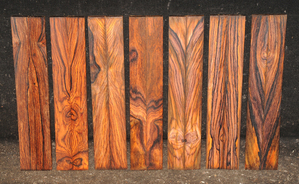
Mexican Cocobolo Knife Handle Scales
Dalbergia retusa
The wood is very oily which makes it difficult to glue but on the plus side the oiliness makes it easy to produce a fantastic polish on finished pieces. Wear a respirator mask when working Cocobolo as the dust can produce asthma-like reactions. Cocobolo is a small to medium sized tree and is found mainly in Mexico, Costa Rica, Nicaragua, and Panama.
Due to CITES regulations, we can only ship this species to customers in the United States.
Item Number: W44551
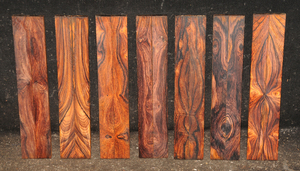
Mexican Cocobolo Knife Handle Scales
Dalbergia retusa
The wood is very oily which makes it difficult to glue but on the plus side the oiliness makes it easy to produce a fantastic polish on finished pieces. Wear a respirator mask when working Cocobolo as the dust can produce asthma-like reactions. Cocobolo is a small to medium sized tree and is found mainly in Mexico, Costa Rica, Nicaragua, and Panama.
Due to CITES regulations, we can only ship this species to customers in the United States.
Item Number: W44550
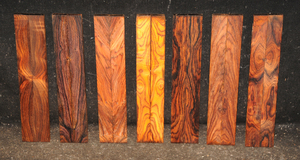
Mexican Cocobolo Knife Handle Scales
Dalbergia retusa
The wood is very oily which makes it difficult to glue but on the plus side the oiliness makes it easy to produce a fantastic polish on finished pieces. Wear a respirator mask when working Cocobolo as the dust can produce asthma-like reactions. Cocobolo is a small to medium sized tree and is found mainly in Mexico, Costa Rica, Nicaragua, and Panama.
Due to CITES regulations, we can only ship this species to customers in the United States.
Item Number: W44549
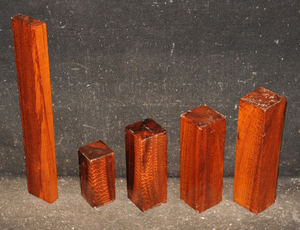
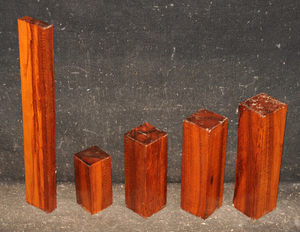
Snakewood Board & Turning Squares
Piratinera guianensis
Also called Letterwood and Leopardwood. Color: dark red to reddish brown with irregular black speckles or stripes. Fine textured and highly lustrous. Very hard and heavy, 75-84 lbs/cu ft. Takes a beautiful finish. Very rare and very expensive. Guyana and Surinam.
This stock is from logs that are at least 30 years old.
Item Number: W44548
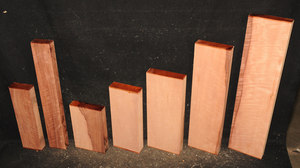
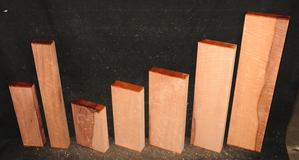
Figured European Pearwood
Pyrus communis
Almost all Pearwood imported into the U.S.A. has been steamed to bring out a more pinkish-red color and to prevent drying stresses. Formerly the wood was used for carving, turning, drawing instruments, wood engravings, textile printing blocks, and tool handles. Stained black it is an excellent substitute for Ebony. Contemporary uses include woodwinds such as recorders, furniture, kitchen accessories, jewelry and other boxes, and architectural uses such as paneling and doors.
Item Number: W44546
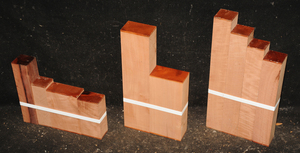
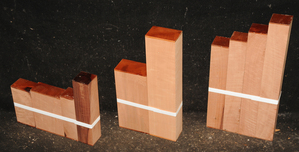
European Pearwood Bundles
Pyrus communis
Almost all Pearwood imported into the U.S.A. has been steamed to bring out a more pinkish-red color and to prevent drying stresses. Formerly the wood was used for carving, turning, drawing instruments, wood engravings, textile printing blocks, and tool handles. Stained black it is an excellent substitute for Ebony. Contemporary uses include woodwinds such as recorders, furniture, kitchen accessories, jewelry and other boxes, and architectural uses such as paneling and doors.
A has 4 pieces.
B has 2 pieces.
C has 4 pieces.
Item Number: W44545
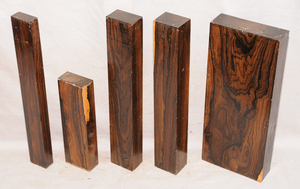
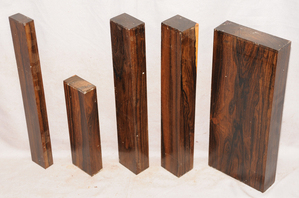
Ziricote
Cordia dodecandra
Ziricote is another timber we get from the Yucatan Peninsula of Mexico. It is a lovely wood with a very pronounced ray fleck on radial surfaces sometimes producing a "landscape" effect much like picture jasper.
Item Number: W44543
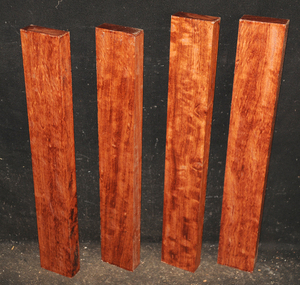
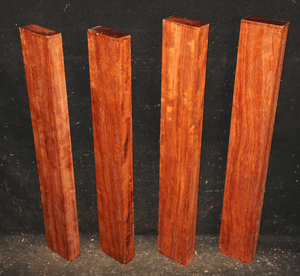
Figured Bubinga
Guibourtia tessmannii
Called by some woodworkers African Rosewood, Bubinga is a deep, lustrous, brownish-red color with a fine, darker striping. The figure makes the wood doubly beautiful. It is very hard and heavy and takes a glassy, smooth finish.
Due to CITES regulations, we can only ship this species to customers in the United States.
Item Number: W44539
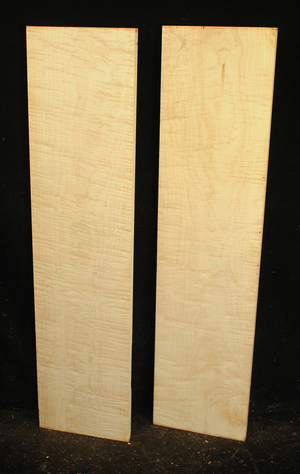
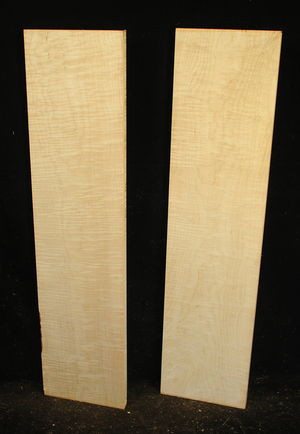
Curly Hard Maple
Acer saccharum
The heartwood is white or cream to light brown or reddish brown. Because of the generally small size of available logs, most sawmills produce flatsawn boards which will show a broken curl on the surface and a fiddleback curl on the quartersawn edge. Hard and heavy, 45 lbs/cu ft. Easy to work and takes a smooth polish. U.S.A.
Item Number: W44537
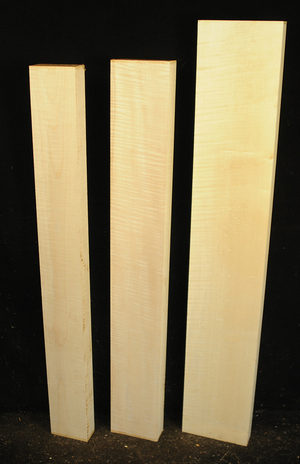
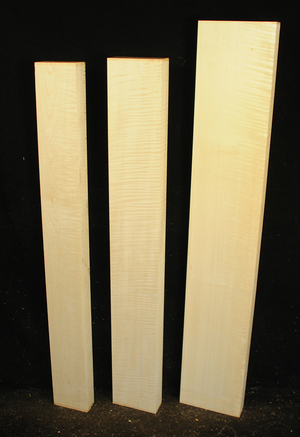
Curly European Sycamore
Acer pseudoplatanus
This European Maple is native to central Europe and west Asia. It is a tough, white or cream colored, fine-grained timber. It reminds me of vanilla ice cream because it is so even-colored. It works well in any grain direction. It is used for musical instruments, furniture, cabinetry, and because it is non-staining it is used for kitchen utensils, wooden spoons, rolling pins, and cutting boards. The figure is fiddleback on the quartersawn surface and more of a broken curl on the flatsawn surface. Select, quartersawn material is used for violin backs and sides and necks. Dry.
Item Number: W44536