
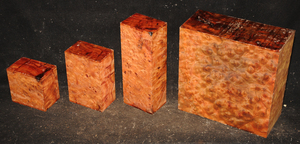
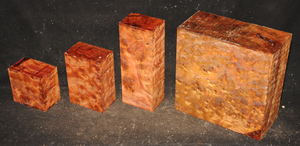
Camphor Burl
Cinnamomum sp.
This rare burl is from S.E. Asia and is seldom seen on the world market. It is fine-grained and varies in color from a light reddish-brown to almost scarlet. It is easy to work and has a very pungent, spicy scent. For a burl it is remarkably stable. Green to partially air dried.
Item Number: W44142

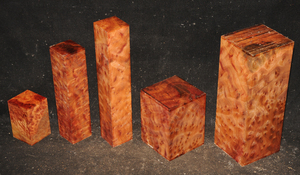
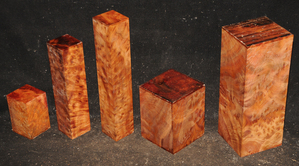
Camphor Burl Turning Squares
Cinnamomum sp.
This rare burl is from S.E. Asia and is seldom seen on the world market. It is fine-grained and varies in color from a light reddish-brown to almost scarlet. It is easy to work and has a very pungent, spicy scent. For a burl it is remarkably stable. Green to partially air dried.
Item Number: W44141
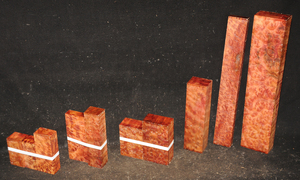
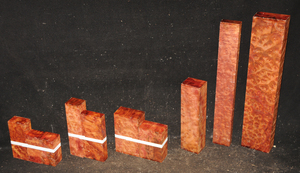
Camphor Burl Bundles & Blocks
Cinnamomum sp.
This rare burl is from S.E. Asia and is seldom seen on the world market. It is fine-grained and varies in color from a light reddish-brown to almost scarlet. It is easy to work and has a very pungent, spicy scent. For a burl it is remarkably stable. Green to partially air dried.
A has 3 pieces.
B has 2 pieces.
C has 2 pieces.
Item Number: W44140
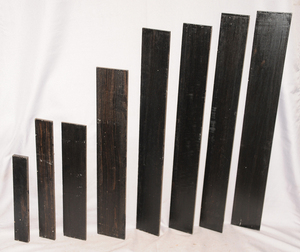
West African Ebony Thins
Diospyros crassiflora
Sometimes called Gabon or Gaboon, this Ebony is sometimes jet black but oftentimes has grayish streaks that mostly disappear when finished or after the made object has been put into service. This Ebony has a marked resistance to checking that is characteristic of some of the Indian and Asian species. It has a wonderful texture and is easily carved, planed, turned, and milled. It is fairly fine-grained and takes a high polish. This Ebony usually originates in either Cameroon or Nigeria and the logs are rough hewn in the forest and oftentimes brought to the nearest road by human porters. With the disappearance of other species of black Ebony this species is fast becoming the Ebony of choice.
Item Number: W44137
Pau Rosa
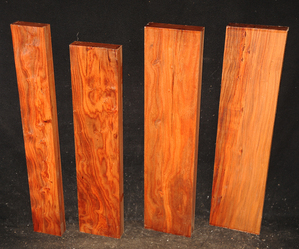
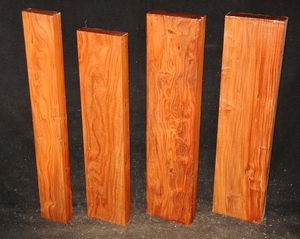
Swartzia fistuloides
Hard & heavy & capable of a beautiful polish. Rare on the American market. Partially air dried.
Item Number: W44134
Pau Rosa
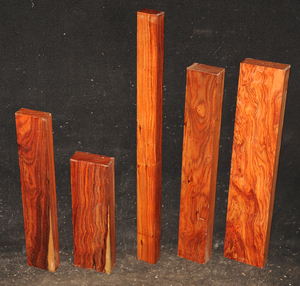
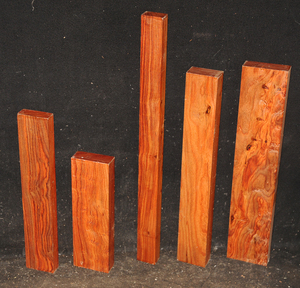
Swartzia fistuloides
Hard & heavy & capable of a beautiful polish. Rare on the American market. Partially air dried.
E has some peckout on one face.
Item Number: W44133
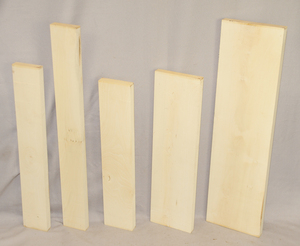
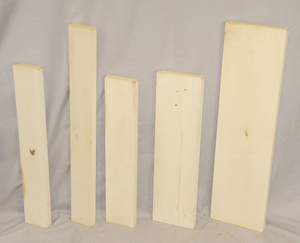
American Holly
Ilex opaca
Holly is the whitest wood commercially available. Our stock was cut during the winter and quickly dried in a vacuum kiln to prevent discoloration. The result is very white wood without gray or bluish staining. The wood is fine-grained and is excellent for turnery, inlays, musical instrument edge bandings, etc. The grade is common and better which means that there can be some defects, mainly knots.
Item Number: W44129
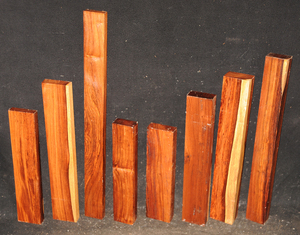
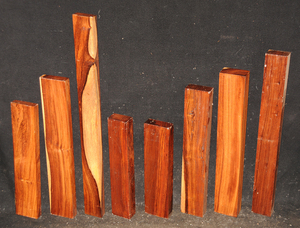
Honduras Rosewood
Dalbergia stevensonii
A true rosewood, most of our stock comes from Belize. Smelling like stored apples, it is a lovely wood to turn and takes a fantastic polish. Getting scarce on the world market.
Due to CITES regulations, we can only ship this species to customers in the United States.
Item Number: W44127
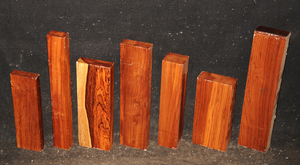
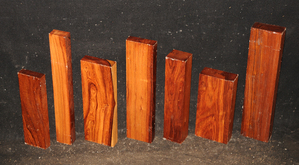
Honduras Rosewood
Dalbergia stevensonii
A true rosewood, most of our stock comes from Belize. Smelling like stored apples, it is a lovely wood to turn and takes a fantastic polish. Getting scarce on the world market.
Due to CITES regulations, we can only ship this species to customers in the United States.
Item Number: W44126
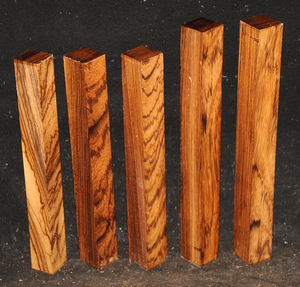
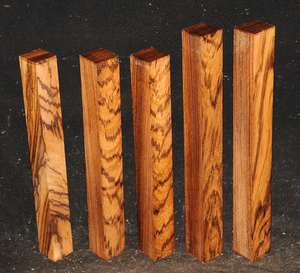
Zebrawood Turning Squares
Microberlinia brazzavillensis
This striped wood develops a beautiful golden patina as it ages.
Item Number: W44123
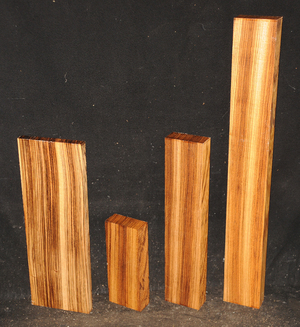
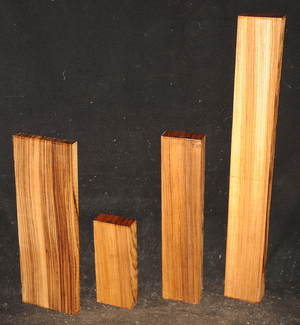
Zebrawood
Microberlinia brazzavillensis
This striped wood develops a beautiful golden patina as it ages.
Item Number: W44122
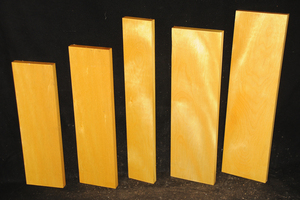
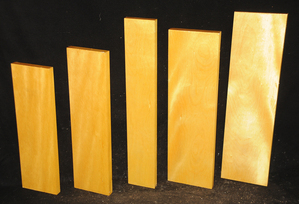
Brazilian Satinwood/Yellowheart
Euxylophora paraensis
Also called Pau Amarello and Yellowheart, the heartwood is a bright yellow color deepening slightly with age. Fairly hard and heavy, easy to work, and capable of taking a high polish.
Item Number: W44120
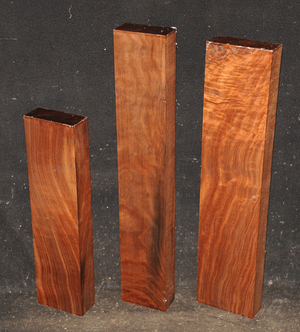
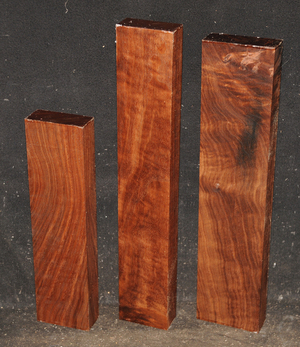
Figured Claro Walnut
Juglans hindsii
A tree found in Southern Oregon and Northern California with the best material coming from the San Joaquin Valley. Lighter in color than Eastern Black Walnut (Juglans regia) it is often found with curly and quilted figure. Burly stumps are also a valuable source of wood for veneers, gunstocks, and wood turning blanks.
Item Number: W44118
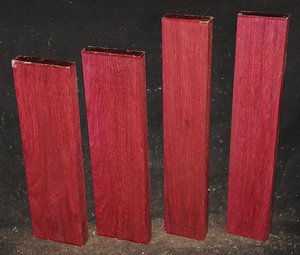
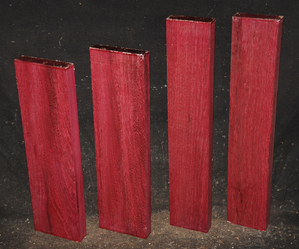
Purpleheart
Peltogyne sp.
The best colored & figured Purpleheart comes from Bolivia. It is also finer-grained than other Purpleheart species found elsewhere. Air-dried.
Item Number: W44113
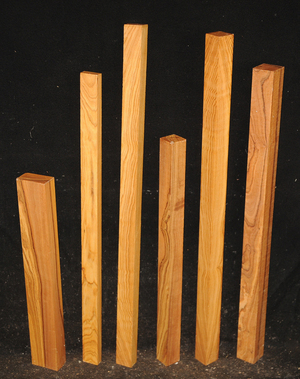
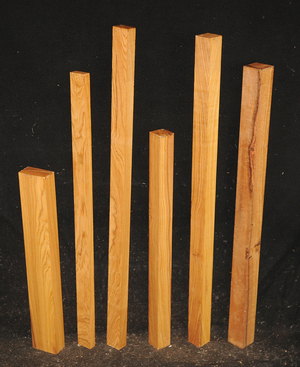
Wild Olivewood
Olea macrocarpa
A species of Olive from South Africa. Very rarely seen on the commercial timber market. It is similar in color to the European species but is denser and harder with more variegations of color and grain. Partially air-dried.
Item Number: W44112
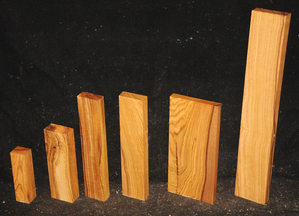
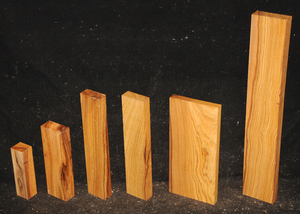
Wild Olivewood
Olea macrocarpa
A species of Olive from South Africa. Very rarely seen on the commercial timber market. It is similar in color to the European species but is denser and harder with more variegations of color and grain. Partially air-dried.
Item Number: W44111
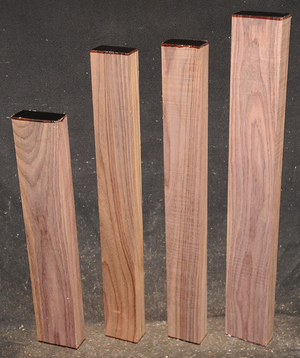
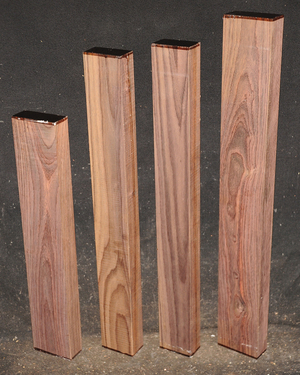
East Indian Rosewood
Dalbergia latifolia
This is grown on plantations in Indonesia where it is called Sonokeling. These came from a tree large enough and old enough to look much like the old-growth lumber from India.
Due to CITES regulations, we can only ship this species to customers in the United States.
Item Number: W44110
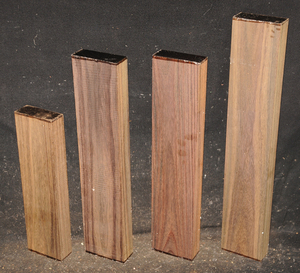
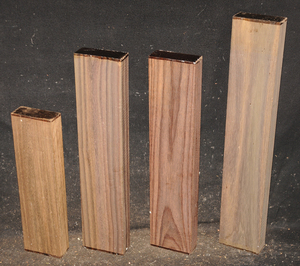
East Indian Rosewood
Dalbergia latifolia
This is grown on plantations in Indonesia where it is called Sonokeling. These came from a tree large enough and old enough to look much like the old-growth lumber from India.
Due to CITES regulations, we can only ship this species to customers in the United States.
Item Number: W44109
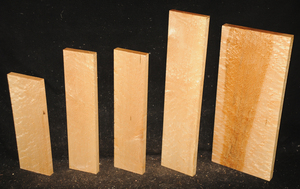
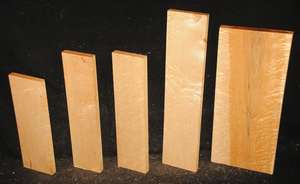
Bird's-eye Maple
Acer saccharum
The heartwood is white or cream to light brown or reddish brown. Figured somewhat like that of burl with many small eyes separate from each other. Hard and heavy, 45 lbs/cu ft. Easy to work and takes a smooth polish. U.S.A.
Item Number: W44108
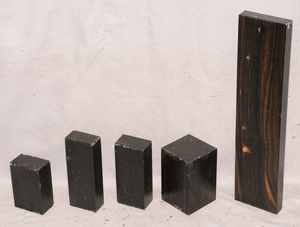
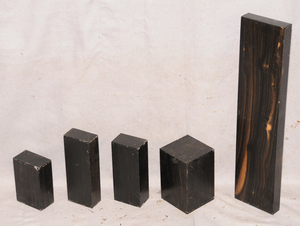
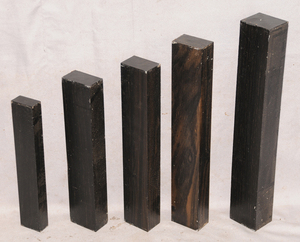
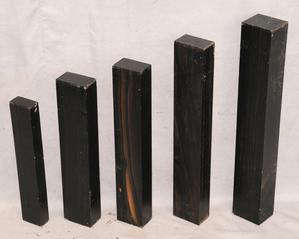
West African Ebony
Diospyros crassiflora
Sometimes called Gabon or Gaboon, this Ebony is sometimes jet black but oftentimes has grayish streaks that mostly disappear when finished or after the made object has been put into service. This Ebony has a marked resistance to checking that is characteristic of some of the Indian and Asian species. It has a wonderful texture and is easily carved, planed, turned, and milled. It is fairly fine-grained and takes a high polish. This Ebony usually originates in either Cameroon or Nigeria and the logs are rough hewn in the forest and oftentimes brought to the nearest road by human porters. With the disappearance of other species of black Ebony this species is fast becoming the Ebony of choice.
Item Number: W44107
West African Ebony
Diospyros crassiflora
Sometimes called Gabon or Gaboon, this Ebony is sometimes jet black but oftentimes has grayish streaks that mostly disappear when finished or after the made object has been put into service. This Ebony has a marked resistance to checking that is characteristic of some of the Indian and Asian species. It has a wonderful texture and is easily carved, planed, turned, and milled. It is fairly fine-grained and takes a high polish. This Ebony usually originates in either Cameroon or Nigeria and the logs are rough hewn in the forest and oftentimes brought to the nearest road by human porters. With the disappearance of other species of black Ebony this species is fast becoming the Ebony of choice.
Item Number: W44106
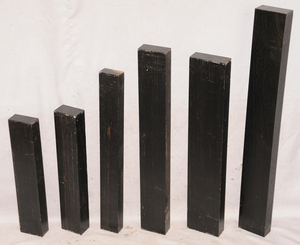
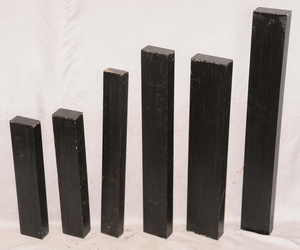
West African Ebony
Diospyros crassiflora
Sometimes called Gabon or Gaboon, this Ebony is sometimes jet black but oftentimes has grayish streaks that mostly disappear when finished or after the made object has been put into service. This Ebony has a marked resistance to checking that is characteristic of some of the Indian and Asian species. It has a wonderful texture and is easily carved, planed, turned, and milled. It is fairly fine-grained and takes a high polish. This Ebony usually originates in either Cameroon or Nigeria and the logs are rough hewn in the forest and oftentimes brought to the nearest road by human porters. With the disappearance of other species of black Ebony this species is fast becoming the Ebony of choice.
Item Number: W44105
West African Ebony
Diospyros crassiflora
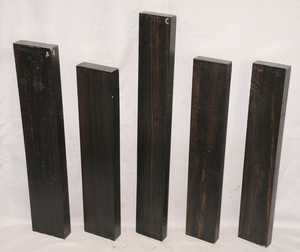
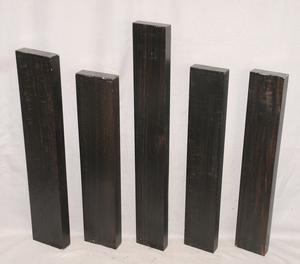
Sometimes called Gabon or Gaboon, this Ebony is sometimes jet black but oftentimes has grayish streaks that mostly disappear when finished or after the made object has been put into service. This Ebony has a marked resistance to checking that is characteristic of some of the Indian and Asian species. It has a wonderful texture and is easily carved, planed, turned, and milled. It is fairly fine-grained and takes a high polish. This Ebony usually originates in either Cameroon or Nigeria and the logs are rough hewn in the forest and oftentimes brought to the nearest road by human porters. With the disappearance of other species of black Ebony this species is fast becoming the Ebony of choice.
A,B & D are figured.
Item Number: W44104
Camphor Burl Turning Squares Bundles
Cinnamomum sp.
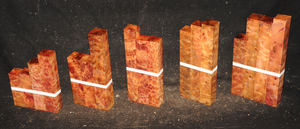
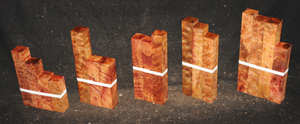
This rare burl is from S.E. Asia and is seldom seen on the world market. It is fine-grained and varies in color from a light reddish-brown to almost scarlet. It is easy to work and has a very pungent, spicy scent. For a burl it is remarkably stable. Green to partially air dried.
A has 4 pieces.
B has 3 pieces.
C has 3 pieces.
D has 3 pieces.
E has 4 pieces.
Item Number: W44101
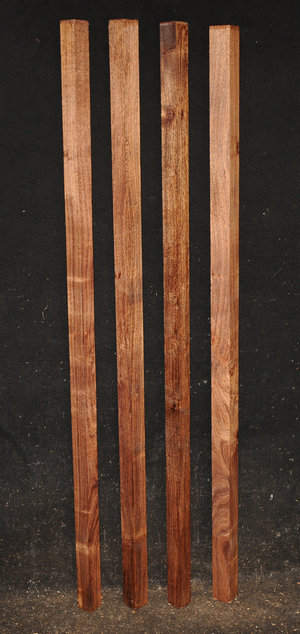
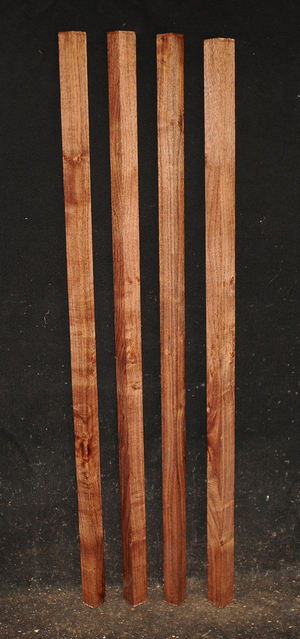
Figured Black Mesquite Reject Cane Blanks
Prosopis nigra
A very few pieces of Mesquite are figured with what we call frog's-hair curl, a small, tight curl with as many as 12-15 curls per inch. A very stable wood. Air-dried.
These have some small pin knots that mean we wouldn't want to use it as a cane or walking stick, but are still gorgeous peices of wood.
Item Number: W44098
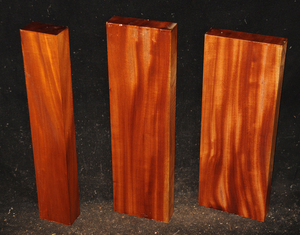
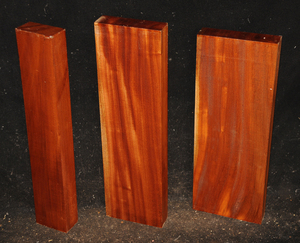
Genuine Mahogany
Swietenia macrophylla
Also called Acajou, Tropical American Mahogany, and Honduras Mahogany. This medium to large tree occurs throughout Central and South America. Related to Cuban Mahogany (Swietenia mahogani) and Pacific Coast Mahogany (Swietenia humilis). It produces one of the classic furniture and cabinetmaking woods. The heartwood varies from a light reddish-brown to a rich, dark red. Generally straight grained and exceptionally stable, it is easy to machine, hand plane, sand and finish. Occasional logs produce several figures, curly, quilted, and the rare plum pudding figure which looks like large drips running down the board. Used in fine furniture and joinery, boat building, and in the guitar industry for acoustic sets and necks.
Due to CITES regulations, we can only ship this species to customers in the United States.
Item Number: W44097
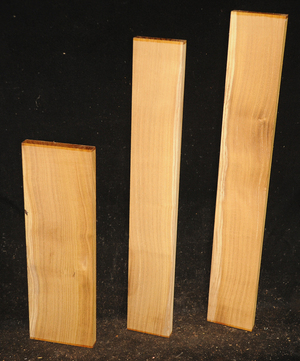
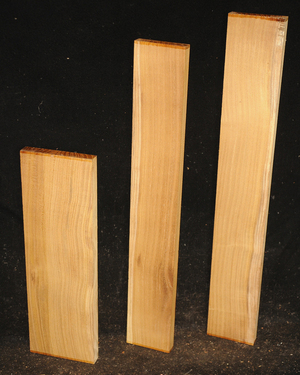
Bulgarian Mulberry
Morus nigra
Found in Asia and Europe this is medium sized tree with a stout trunk. It is probably best known for its leaves on which silkworms feed. The heartwood is yellow to reddish-yellow becoming a rich golden brown. Excellent for chair and furniture work.
Item Number: W44094
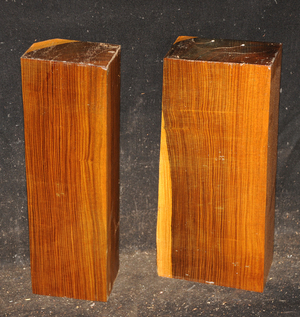
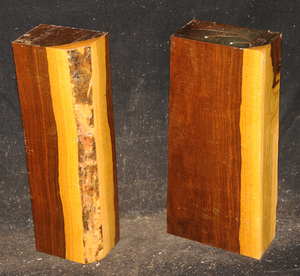
Lignum Vitae
Guaiacum sanctum
One of the world's densest and oiliest woods. The green to greenish-brown heartwood weighs between 80 to 90 lbs/cubic foot. Long used for its self-lubricating qualities in marine applications such as propeller shaft and rudder shaft bearings, it is also thought to have medicinal and healing properties. Its oily nature makes it difficult to glue but makes it a fantastic turning wood.
Any Lignum Vitae on our site is genuine Lignum, not Verawood. We also have Verawood in stock and will be labeled as such on the website.
Due to CITES regulations, we can only ship this species to customers in the United States.
These blocks have some verry shallow surface checks on one face, but there is still a lot of usable, clear material in these pieces. Priced accordingly.
A has a little wane on the sappy corner.
Item Number: W44092
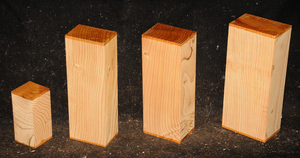
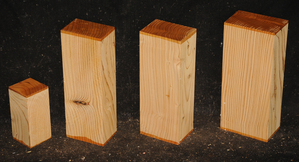
Lebanese Cedar
Cedrus libani
This is one of the true Cedars. There are more than 50 references to Lebanese Cedar in the Bible. Psalms 92:12-"The righteous shall flourish like the palm tree: he shall grow like a Cedar of Lebanon". Because of its durability the Egyptians used it for making mummy cases. Carvings of Cedar have been unearthed in ancient tombs still in excellent condition. These boards are from a tree grown as an ornamental in England. The wood has a crisp texture and a lovely, aromatic scent that is very long lasting.
Item Number: W44088
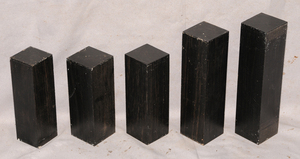
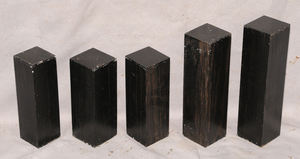
West African Ebony Turning Squares
Diospyros crassiflora
Sometimes called Gabon or Gaboon, this Ebony is sometimes jet black but oftentimes has grayish streaks that mostly disappear when finished or after the made object has been put into service. This Ebony has a marked resistance to checking that is characteristic of some of the Indian and Asian species. It has a wonderful texture and is easily carved, planed, turned, and milled. It is fairly fine-grained and takes a high polish. This Ebony usually originates in either Cameroon or Nigeria and the logs are rough hewn in the forest and oftentimes brought to the nearest road by human porters. With the disappearance of other species of black Ebony this species is fast becoming the Ebony of choice.
Item Number: W44082
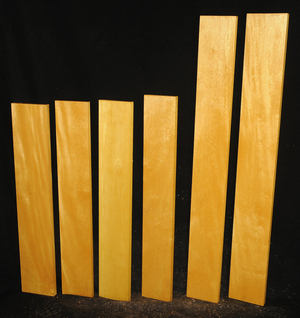
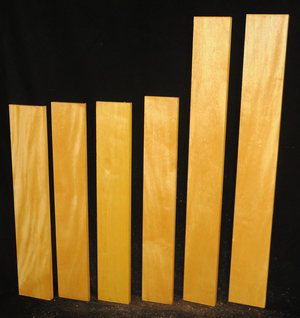
Brazilian Satinwood/Yellowheart
Euxylophora paraensis
Also called Pau Amarello and Yellowheart, the heartwood is a bright yellow color deepening slightly with age. Fairly hard and heavy, easy to work, and capable of taking a high polish.
Item Number: W44077
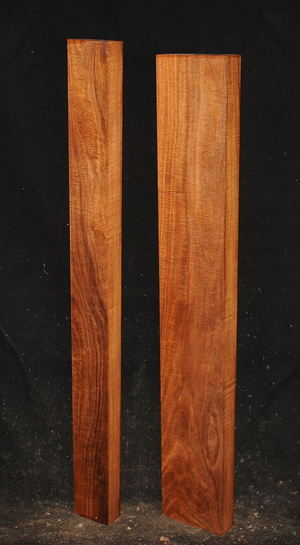
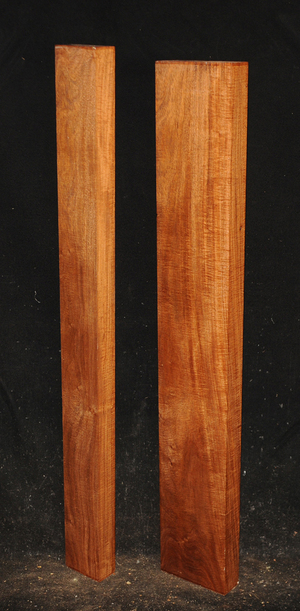
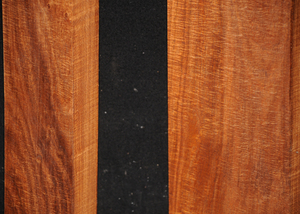
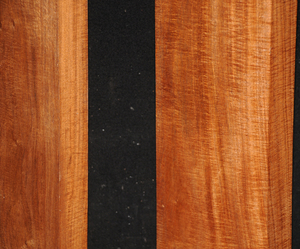
Figured Black Mesquite
Prosopis nigra
A very few pieces of Mesquite are figured with what we call frog's-hair curl, a small, tight curl with as many as 12-15 curls per inch. A very stable wood. Air-dried.
Item Number: W44076
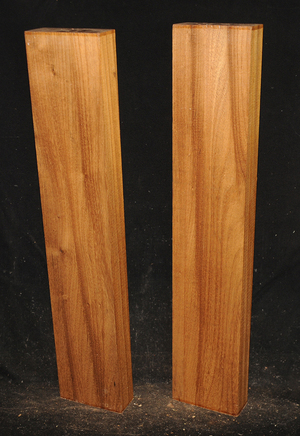
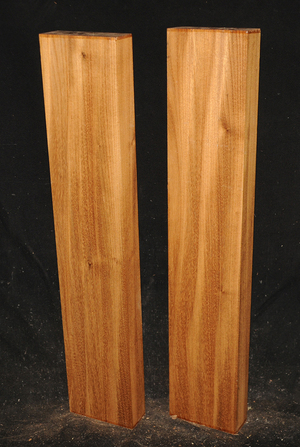
Freijo
Cordia goeldiana
Also called Jennywood, our stock is from Brazil. Freijo is olive-brown to golden brown in color, similar to Teak, occasionally with darker stripes. It has large, flaky, lustrous medullary rays on the quartersawn surfaces. Moderately hard and heavy, dimensionally stable, it works easily and takes a beautiful finish. Used for furniture and cabinets, millwork, msuical instruments and turnery projects.
Item Number: W44073
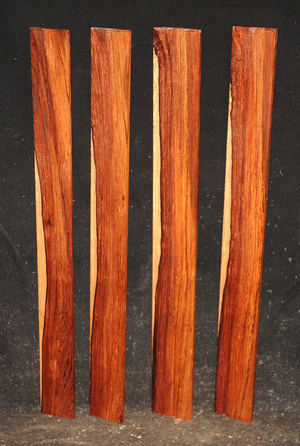
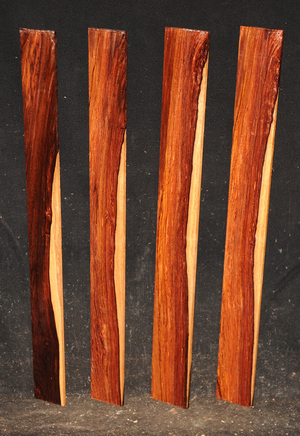
Honduras Rosewood Thins
Dalbergia stevensonii
A true rosewood, most of our stock comes from Belize. Smelling like stored apples, it is a lovely wood to turn and takes a fantastic polish. Getting scarce on the world market.
Due to CITES regulations, we can only ship this species to customers in the United States.
Item Number: W44071
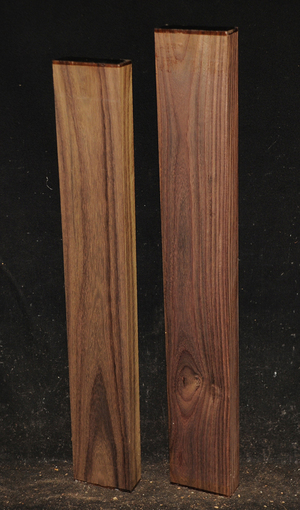
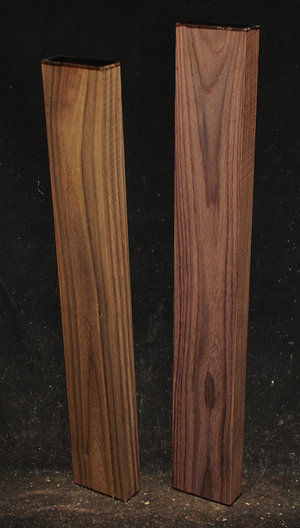
East Indian Rosewood
Dalbergia latifolia
This is grown on plantations in Indonesia where it is called Sonokeling. These came from a tree large enough and old enough to look much like the old-growth lumber from India.
Due to CITES regulations, we can only ship this species to customers in the United States.
Item Number: W44070
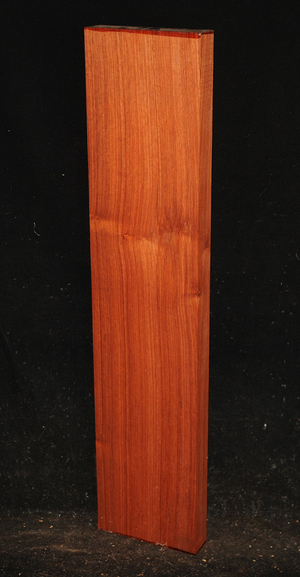
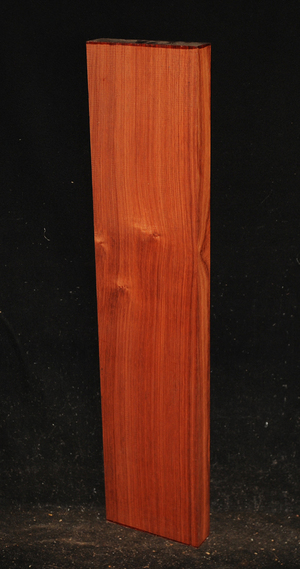
African Padouk
Pterocarpus soyauxii
This brick-red colored West African hardwood was once one of the more common imported hardwoods but has become increasingly scarce in the last couple of years. It is easy to work, takes a nice polish and is dimensionally stable.
Item Number: W44067
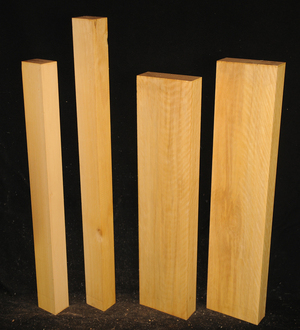
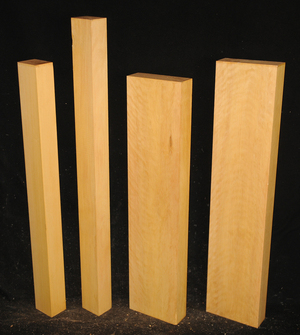
Castello Boxwood
Calycophyllum multiflorum
Castello Boxwood, though not a true Buxus species, still has a very fine texture and a lovely light canary yellow color. This is truly a dream wood to mill.It is an excellent turnery wood, capable of very fine detail. Also very popular for making scale timbers and other parts for model ships. Air-dried.
Item Number: W44065
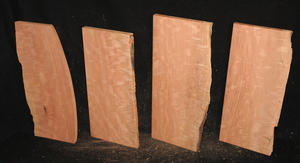
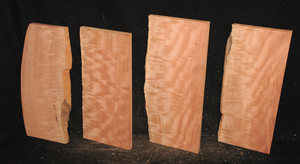
Figured European Pearwood Charcuterie Board Blanks
Pyrus communis
Almost all Pearwood imported into the U.S.A. has been steamed to bring out a more pinkish-red color and to prevent drying stresses. Formerly the wood was used for carving, turning, drawing instruments, wood engravings, textile printing blocks, and tool handles. Stained black it is an excellent substitute for Ebony. Contemporary uses include woodwinds such as recorders, furniture, kitchen accessories, jewelry and other boxes, and architectural uses such as paneling and doors.
These boards may have a few natural defects that were not trimmed off but are otherwise lovely pieces of wood. Surfaced on both faces and flat.
Item Number: W44061
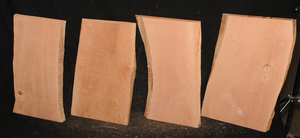
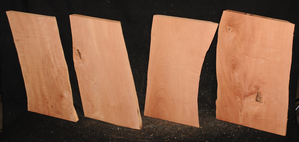
European Pearwood Charcuterie Board Blanks
Pyrus communis
Almost all Pearwood imported into the U.S.A. has been steamed to bring out a more pinkish-red color and to prevent drying stresses. Formerly the wood was used for carving, turning, drawing instruments, wood engravings, textile printing blocks, and tool handles. Stained black it is an excellent substitute for Ebony. Contemporary uses include woodwinds such as recorders, furniture, kitchen accessories, jewelry and other boxes, and architectural uses such as paneling and doors.
These boards may have a few natural defects that were not trimmed off but are otherwise lovely pieces of wood. Surfaced on both faces and flat.
Item Number: W44060
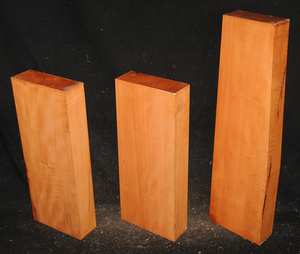
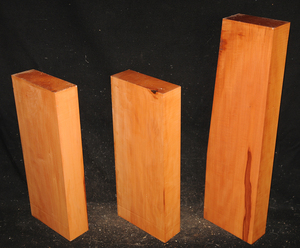
Figured European Pearwood
Pyrus communis
Almost all Pearwood imported into the U.S.A. has been steamed to bring out a more pinkish-red color and to prevent drying stresses. Formerly the wood was used for carving, turning, drawing instruments, wood engravings, textile printing blocks, and tool handles. Stained black it is an excellent substitute for Ebony. Contemporary uses include woodwinds such as recorders, furniture, kitchen accessories, jewelry and other boxes, and architectural uses such as paneling and doors.
Item Number: W44059
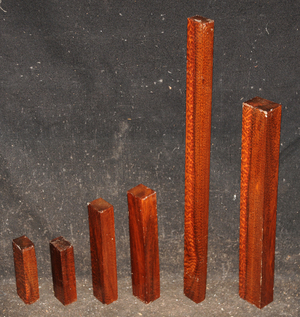
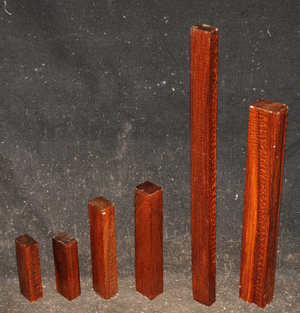
Snakewood
Piratinera guianensis
Also called Letterwood and Leopardwood. Color: dark red to reddish brown with irregular black speckles or stripes. Fine textured and highly lustrous. Very hard and heavy, 75-84 lbs/cu ft. Takes a beautiful finish. Very rare and very expensive. Guyana and Surinam.
Item Number: W44057
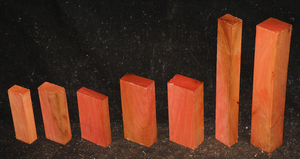
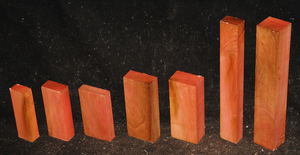
Pink Ivory
Berchemia zeyheri
A fairly rare wood from Southern Africa ranging in color from light pink to watermelon red. At one time it was described as being "rarer than diamonds". It is very dense, hard and heavy and takes a very high polish. Beautiful for turnery, inlays and other precious items.
Item Number: W44054
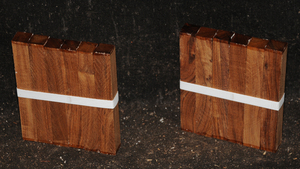
Tambootie Pen Blank Bundles
Spirostachys africanus
Also called African Sandalwood, this is a very aromatic wood, hard and heavy and takes a high polish.
6 pieces per bundle.
Item Number: W44052
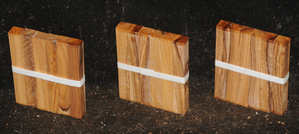
Wild Olivewood Pen Blank Bundles
Olea macrocarpa
A species of Olive from South Africa. Very rarely seen on the commercial timber market. It is similar in color to the European species but is denser and harder with more variegations of color and grain. Partially air-dried.
6 pieces per bundle.gvb
Item Number: W44051
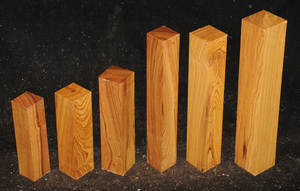
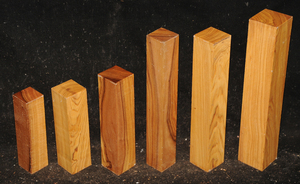
Wild Olivewood Turning Squares
Olea macrocarpa
A species of Olive from South Africa. Very rarely seen on the commercial timber market. It is similar in color to the European species but is denser and harder with more variegations of color and grain. Partially air-dried.
Item Number: W44050
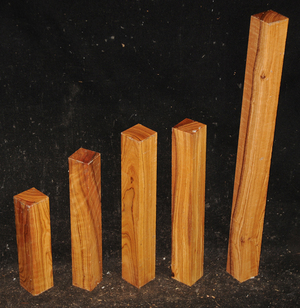
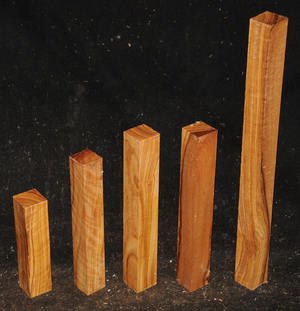
Wild Olivewood Turning Squares
Olea macrocarpa
A species of Olive from South Africa. Very rarely seen on the commercial timber market. It is similar in color to the European species but is denser and harder with more variegations of color and grain. Partially air-dried.
Item Number: W44049
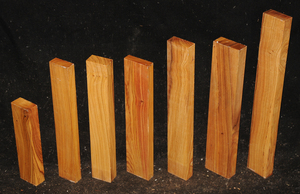
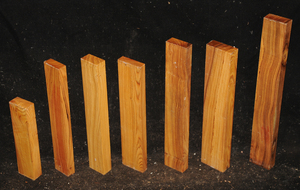
Wild Olivewood
Olea macrocarpa
A species of Olive from South Africa. Very rarely seen on the commercial timber market. It is similar in color to the European species but is denser and harder with more variegations of color and grain. Partially air-dried.
Item Number: W44048
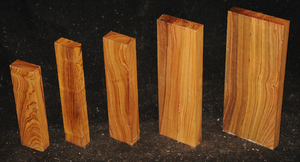
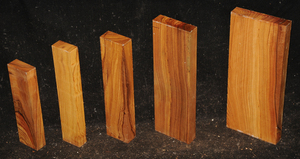
Wild Olivewood
Olea macrocarpa
A species of Olive from South Africa. Very rarely seen on the commercial timber market. It is similar in color to the European species but is denser and harder with more variegations of color and grain. Partially air-dried.
Item Number: W44047
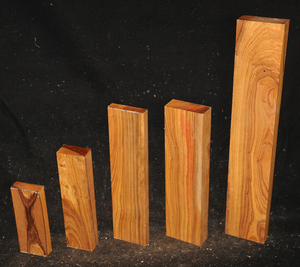
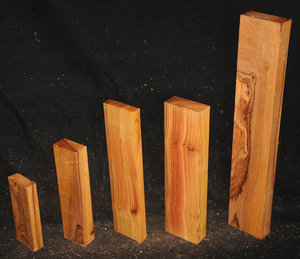
Wild Olivewood
Olea macrocarpa
A species of Olive from South Africa. Very rarely seen on the commercial timber market. It is similar in color to the European species but is denser and harder with more variegations of color and grain. Partially air-dried.
Item Number: W44046
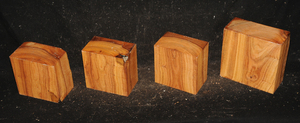
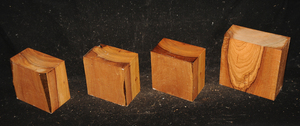
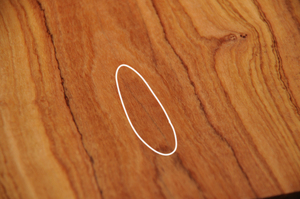
Wild Olivewood Bowl Blanks
Olea macrocarpa
A species of Olive from South Africa. Very rarely seen on the commercial timber market. It is similar in color to the European species but is denser and harder with more variegations of color and grain. Partially air-dried.
All of these blanks have some slight surface checks on one face. They should mostly turn off and as such, cutting them off would reduce the over all thickness of these pieces. See the closeup image for a better look at the defects. Priced accordingly.
Item Number: W44045