-
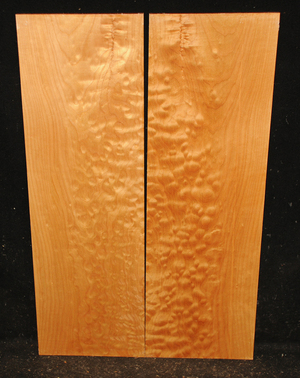
This tree is native to the Pacific Northwest. It has the distinction of having the largest leaf of the Maples-up to 15" in diameter. This is a soft Maple. The tree can produce many different types of figure, including quilted (tubular, popcorn, & cloud), curly (fiddleback, broken, & basketweave), and burl.
-
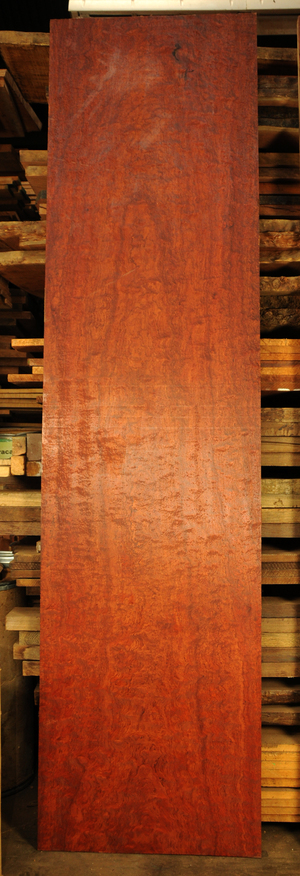
Called by some woodworkers African Rosewood, Bubinga is a deep, lustrous, brownish-red color with a fine, darker striping. The figure makes the wood doubly beautiful. It is very hard and heavy and takes a glassy, smooth finish.
Due to CITES regulations, we can only ship this species to customers in the United States.
These gorgeous table slabs were cut in the 1990's from Cameroon Bubinga logs, before Cameroon stopped log exports. This Bubinga has the best figure coupled with a deep, rich color. We have applied one coat of clear shellac to show the beautiful figure. These are one of a kind boards and will make tables with outstanding beauty.
-

Called by some woodworkers African Rosewood, Bubinga is a deep, lustrous, brownish-red color with a fine, darker striping. The figure makes the wood doubly beautiful. It is very hard and heavy and takes a glassy, smooth finish.
Due to CITES regulations, we can only ship this species to customers in the United States.
-

Called by some woodworkers African Rosewood, Bubinga is a deep, lustrous, brownish-red color with a fine, darker striping. The figure makes the wood doubly beautiful. It is very hard and heavy and takes a glassy, smooth finish.
Due to CITES regulations, we can only ship this species to customers in the United States.
These gorgeous table slabs were cut in the 1990's from Cameroon Bubinga logs, before Cameroon stopped log exports. This Bubinga has the best figure coupled with a deep, rich color. We have applied one coat of clear shellac to show the beautiful figure. These are one of a kind boards and will make tables with outstanding beauty.
-
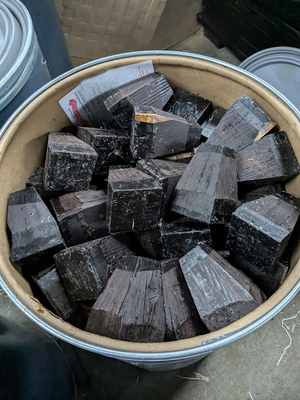
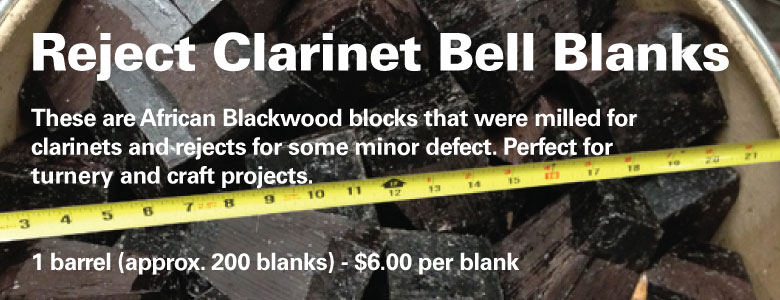
The heartwood of African Blackwood is purplish to brownish-black with dark gray streaks giving an overall impression of being black. Lustrous with an attractive inner chatoyance. Very hard, heavy, close-grained, and virtually free from pores. Its main use is in turning, and it claims the title of the finest of turnery woods, well known as the standard by which other turnery woods are judged. Long a favorite of ornamental turners, the nature of the wood allows very fine detail with sharp cutters, leaving a beautiful, burnished surface.
Some blanks may have sapwood corners or more, burly or wild grain, occasional bug holes, small inclusions, small checks, i.e. they have the small defects common to Blackwood. That said these have to be the best quality rejects I have seen in nearly 30 years. A good percentage have no discernible defects and those that do have minor ones.
They are an odd size to make it easier to turn the bell or flared end of a clarinet. On one end they are 2 3/4-3 1/4" square and the other end is 1 3/8-1 5/8" square with tapered sides as in the photo. Length is 4 3/4-5 1/4".
The barrel will ship via freight truck. Please call us if you have any questions. 503-274-1271
Due to CITES regulations, we can only ship this species to customers in the United States.
A has 196 pieces.
B has 196 pieces.
C has 198 pieces.
D has 195 pieces.
E has 193 pieces.
F has 195 pieces.
-

220 volt, three phase, no tooling. Would prefer pick-up from our warehouse in Portland, Oregon but might be persuaded to crate and ship.
Give us a call for more details. 503-274-1271
-

Also called European Basswood, this species grows throughout Europe. It was the favorite wood of the English carver Grinling Gibbons and the German Gothic sculptor Tilman Riemenschneider. Pale in color, it has a straight grain and fine, even texture. It is easy to work and can easily be carved with, against, and cross the grain. It is recognized as one of the classic carving woods. Air-dried.
-

This striped wood develops a beautiful golden patina as it ages.
-

This slice of burl came from an ancient forest tree of Laos. Surviving its youth as a sapling, it survived despite tropical monsoons, insect invasions, and wars to become a behemoth 16 feet in girth and 50 feet to its first branch. It eventually succumbed to old age and began the inevitable journey back to the earth from whence it came. This burl was rescued before its total demise but not before some insects left some damage in the outer sapwood. A unique, one-of-a-kind forest gem.
-
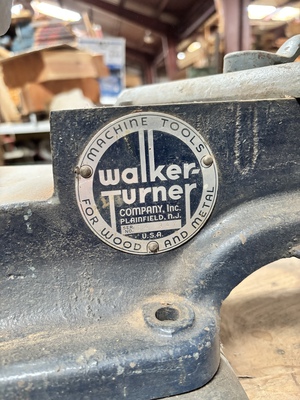
12"x36" lathe. 16" over the gap. Variable speed. Comes with 1 face plate, tool rest banjo, and one tool rest. Single phase. Pick-up at our warehouse in Portland, OR.
-
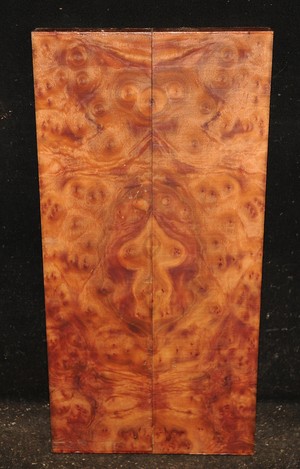
This rare burl is from S.E. Asia and is seldom seen on the world market. It is fine-grained and varies in color from a light reddish-brown to almost scarlet. It is easy to work and has a very pungent, spicy scent. For a burl it is remarkably stable. Green to partially air dried.
-
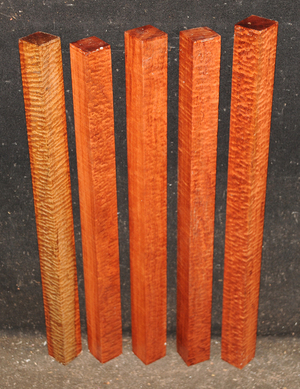
Called by some woodworkers African Rosewood, Bubinga is a deep, lustrous, brownish-red color with a fine, darker striping. The figure makes the wood doubly beautiful. It is very hard and heavy and takes a glassy, smooth finish.
Due to CITES regulations, we can only ship this species to customers in the United States.
A has some sapwood. The sapwood has a couple of small bugholes.
-
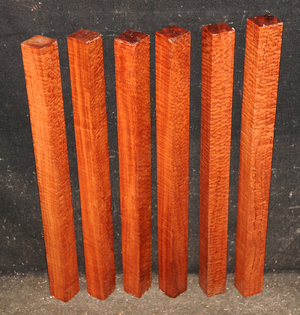
Called by some woodworkers African Rosewood, Bubinga is a deep, lustrous, brownish-red color with a fine, darker striping. The figure makes the wood doubly beautiful. It is very hard and heavy and takes a glassy, smooth finish.
Due to CITES regulations, we can only ship this species to customers in the United States.
For Nearly 50 years, I have bought or inspected many thousands of tonnes of Bubinga. The figure in the log these squares are from is some of the best I have seen. One of a kind. These squares are highly figured on all four sides. The are well seasoned and stable. I bought these boards in the 1990's.
These squares are all highly figured. Any disparity in the photographs is just due to the difficulty in photographing the squares so the figure shows up. They were all cut from the same board and all are absolutely fantastic pieces of wood.
-
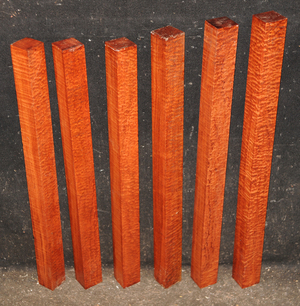
Called by some woodworkers African Rosewood, Bubinga is a deep, lustrous, brownish-red color with a fine, darker striping. The figure makes the wood doubly beautiful. It is very hard and heavy and takes a glassy, smooth finish.
Due to CITES regulations, we can only ship this species to customers in the United States.
For Nearly 50 years, I have bought or inspected many thousands of tonnes of Bubinga. The figure in the log these squares are from is some of the best I have seen. One of a kind. These squares are highly figured on all four sides. The are well seasoned and stable. I bought these boards in the 1990's.
These squares are all highly figured. Any disparity in the photographs is just due to the difficulty in photographing the squares so the figure shows up. They were all cut from the same board and all are absolutely fantastic pieces of wood.
-
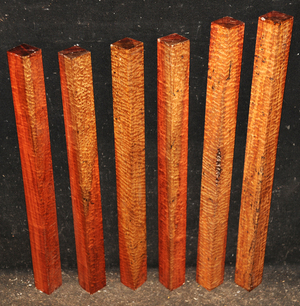
Called by some woodworkers African Rosewood, Bubinga is a deep, lustrous, brownish-red color with a fine, darker striping. The figure makes the wood doubly beautiful. It is very hard and heavy and takes a glassy, smooth finish.
Due to CITES regulations, we can only ship this species to customers in the United States.
These pieces with sapwood have some small bug holes in the sapwood. If you look closely at the photos, you'll see small dark spots; those are the holes.
For Nearly 50 years, I have bought or inspected many thousands of tonnes of Bubinga. The figure in the log these squares are from is some of the best I have seen. One of a kind. These squares are highly figured on all four sides. The are well seasoned and stable. I bought these boards in the 1990's.
These squares are all highly figured. Any disparity in the photographs is just due to the difficulty in photographing the squares so the figure shows up. They were all cut from the same board and all are absolutely fantastic pieces of wood.
-
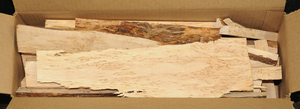
Also called Alpine Burl or Karelian Burl after the Finnish province of Karelia where it is often found. The high figure found in this wood is caused when the tree heals the damage done by an invasive boring beetle. The beetle infestation leaves the trees stunted and sometimes deformed but produces wood with small twists and swirls that highlight the darker, burly figure. Rare.
Our bargain boxes contain the mill ends and cut offs from producing the other products that are on our website. The pieces in this box may contain defects.
Net weight is 7.5 lbs.
Box size is 6 x 6 x 20".
-
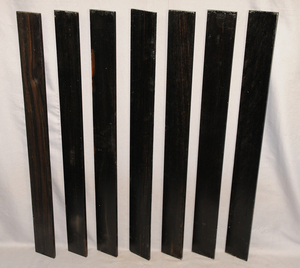
Sometimes called Gabon or Gaboon, this Ebony is sometimes jet black but oftentimes has grayish streaks that mostly disappear when finished or after the made object has been put into service. This Ebony has a marked resistance to checking that is characteristic of some of the Indian and Asian species. It has a wonderful texture and is easily carved, planed, turned, and milled. It is fairly fine-grained and takes a high polish. This Ebony usually originates in either Cameroon or Nigeria and the logs are rough hewn in the forest and oftentimes brought to the nearest road by human porters. With the disappearance of other species of black Ebony this species is fast becoming the Ebony of choice.
-
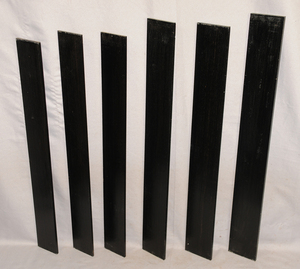
Sometimes called Gabon or Gaboon, this Ebony is sometimes jet black but oftentimes has grayish streaks that mostly disappear when finished or after the made object has been put into service. This Ebony has a marked resistance to checking that is characteristic of some of the Indian and Asian species. It has a wonderful texture and is easily carved, planed, turned, and milled. It is fairly fine-grained and takes a high polish. This Ebony usually originates in either Cameroon or Nigeria and the logs are rough hewn in the forest and oftentimes brought to the nearest road by human porters. With the disappearance of other species of black Ebony this species is fast becoming the Ebony of choice.
-
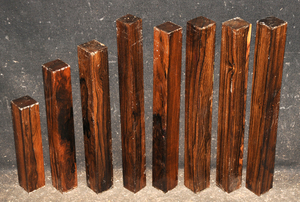
Ziricote is another timber we get from the Yucatan Peninsula of Mexico. It is a lovely wood with a very pronounced ray fleck on radial surfaces sometimes producing a "landscape" effect much like picture jasper.
-
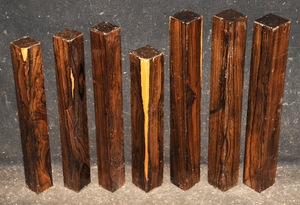
Ziricote is another timber we get from the Yucatan Peninsula of Mexico. It is a lovely wood with a very pronounced ray fleck on radial surfaces sometimes producing a "landscape" effect much like picture jasper.